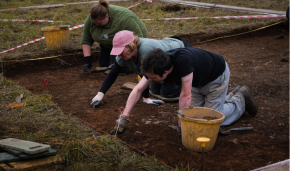
With the excavation process racing to its conclusion, the team at Castilly has made significant strides towards having the site ready for dating.
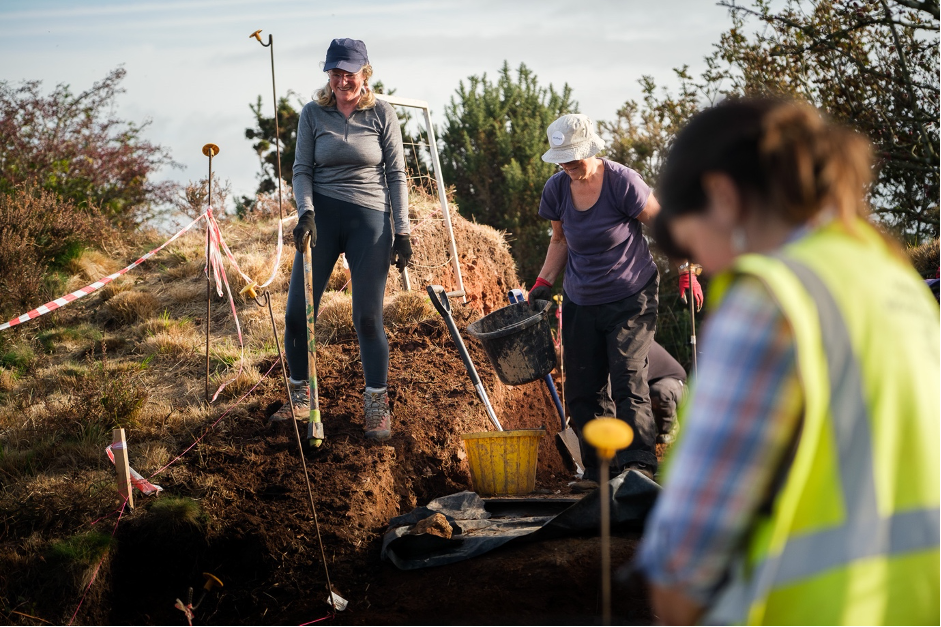
‘Castilly Henge Excavation’ Cornwall Heritage Trust (2025), supported by The National Lottery Heritage Fund, CC BY 4.0.
Historic England originally set out a series of questions that the archaeological excavation sought to answer. These included when it was constructed, how long it was in use, what activities occurred inside of it, what is the nature of the arc of geophysical survey anomalies in the centre of the monument and how and when the monument had been altered. This extensive list of questions has silently underpinned all the work that has occurred on site over the past four weeks.
Within the objectives, it is specified that “there is currently a significant knowledge gap surrounding the absolute chronology of both henge monuments and stone circles in Cornwall and Devon.” Gaining insight into this monument and the landscape in which it was constructed will aid in a region-wide understanding of these monuments.
The Historic England team, led by Ian Barnes, Olaf Bayer and Nicola Hembrey, has directed the excavation. Their team has concentrated on the trench crossing the bank and ditch. This overlaps one of Charles Thomas’ cuttings; however, this has to be larger to enable access to undisturbed material. This will be the site from which cores are gathered for radiocarbon and optically stimulated luminescence (OSL) dating.
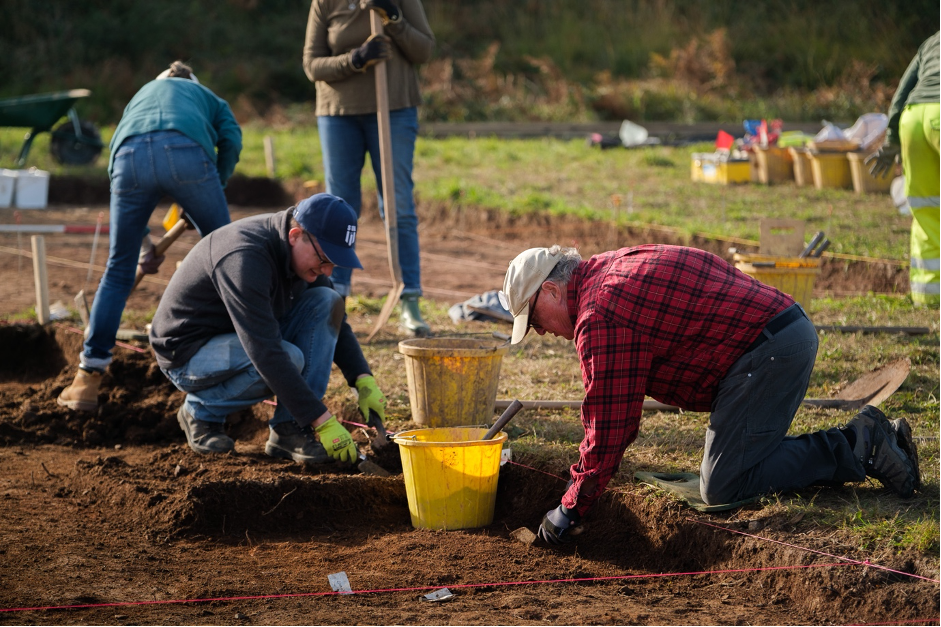
‘Castilly Henge Excavation’ Cornwall Heritage Trust (2025), supported by The National Lottery Heritage Fund, CC BY 4.0.
Radiocarbon dating works by measuring the amount of the isotope Carbon-14 in organic matter. When an organism dies, the amount of Carbon-14 within it decreases due to isotopic decay, and the time elapsed can be estimated. This technique can only be used on organic matter such as plant or animal remains.
OSL dating can be used to determine when inorganic materials, such as quartz (which fortunately we have in abundance in Cornwall), were last exposed to light.
Depending on what materials are found, we should be able to date when the henge was constructed. We can learn about the activities that went on in this site and the nature of the anomalies in the central trenches. Hopefully, excavated material will yield some useful artefacts which we can use to learn about the nature of the site and its purposes. Pollen analysis will also help us to understand the henge’s contemporary landscape and climate, contributing to our understanding of the time period in which it was constructed. These will all contribute to a well-rounded picture of this henge.
The Historic England team and Cornwall Archaeological Unit have worked tirelessly to learn more about this site. This will increase our understanding of the site and inform its future management.
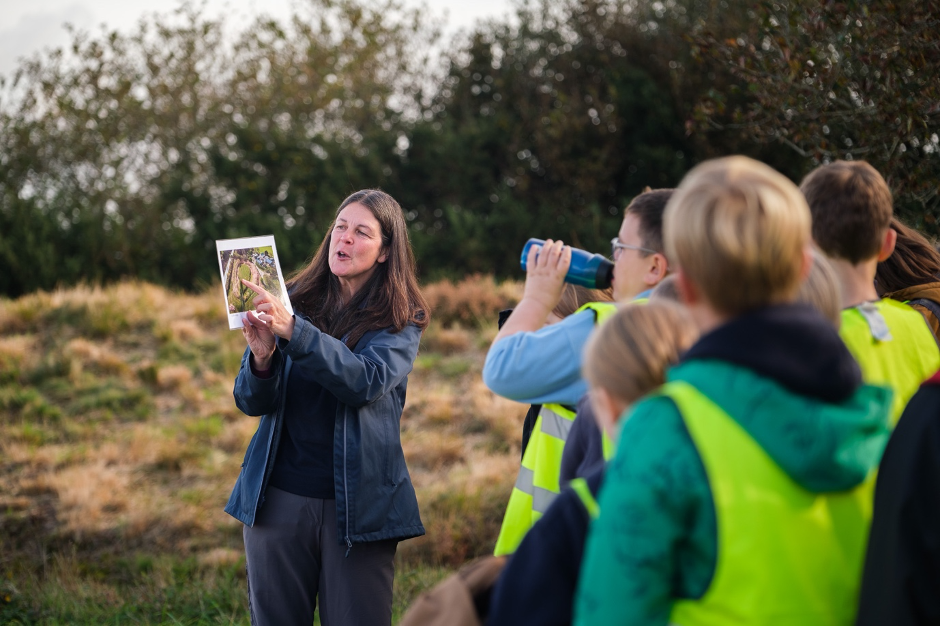
‘Castilly Henge Excavation’ Cornwall Heritage Trust (2025), supported by The National Lottery Heritage Fund, CC BY 4.0.
With students being guided around the site and the preparations for dating well underway, the site has been a hive of activity in this, the final week of excavating before backfilling. With over 300 schoolchildren having visited and witnessed an archaeological excavation, and many volunteers having taken part, this project has been invaluable in engaging local communities with their history.

‘Castilly Henge Excavation’ Cornwall Heritage Trust (2025), supported by The National Lottery Heritage Fund, CC BY 4.0.
The excavation was funded and directed by Historic England and supported by staff from Cornwall Archaeological Unit. Volunteering and outreach were made possible through a £42,990 grant to Cornwall Archaeological Society from The National Lottery Heritage Fund and a £10,000 grant from Historic England.
This project is a collaboration between…



Made possible by funding from…


Please cite this resource as: ‘Castilly Henge Excavation’ Cornwall Heritage Trust (2025), supported by The National Lottery Heritage Fund, CC BY 4.0.