In the wake of the significant storm damage Cornwall has recently experienced, investigating common woodland management techniques was the priority for our first Young Rangers session of 2026.

Our award-winning Young Rangers ‘Climate Action Youth Group’ offers the chance for those aged 12 – 18 to take action over the climate crisis, assist with environmental work on historic natural landscapes and develop skills in countryside management. All sessions take place on weekdays in school half terms and holidays.
The session was led by James, one of our Countryside Rangers, and Caroline, our Education and Outreach Manager.

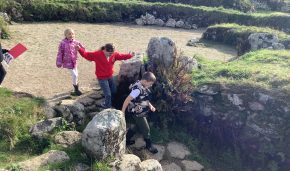
Heading to Tony’s Woods at Sancreed Beacon near Penzance, the team examined the effects of recent storms and learnt about how Cornwall Heritage Trust’s Rangers have been dealing with the damage.
Their focus then moved to an area of willow being coppiced this winter. James led the Young Rangers through the history of coppicing, as well as the huge benefits it has for modern land management and conservation by changing the age structure of woodland and helping create a wide variety of habitats to support biodiversity.

It was then time for our Young Rangers to have a go. With expert guidance from our team, they learnt to use loppers and saws to safely cut down larger limbs from the willow trees, before building a dead hedge with the brash.
Our Young Rangers ‘Climate Action Youth Group’ is currently part-funded by the National Lottery Community Fund and holidaycottages.co.uk.


Would your child like to take part?
Upcoming sessions will take place on Thursday 16th April, Thursday 28th May, Thursday 30th July, Thursday 13th August, Thursday 27th August and Thursday 29th October. We expect participants to be available for at least five sessions.
“We were exceptionally lucky to be guided by an outstanding trip leader from the Cornwall Heritage Trust, whose enthusiasm, expertise, and brilliant storytelling brought the site to life. Her passion for Cornish heritage shone through every moment, and we are so grateful for the knowledge, care, and energy she shared with the children.”
We’re so pleased to hear how much the children from Delabole Primary School learnt on their recent ‘Discovery Workshop’ at Castle an Dinas (East), one of Cornwall’s largest and most impressive hillforts.
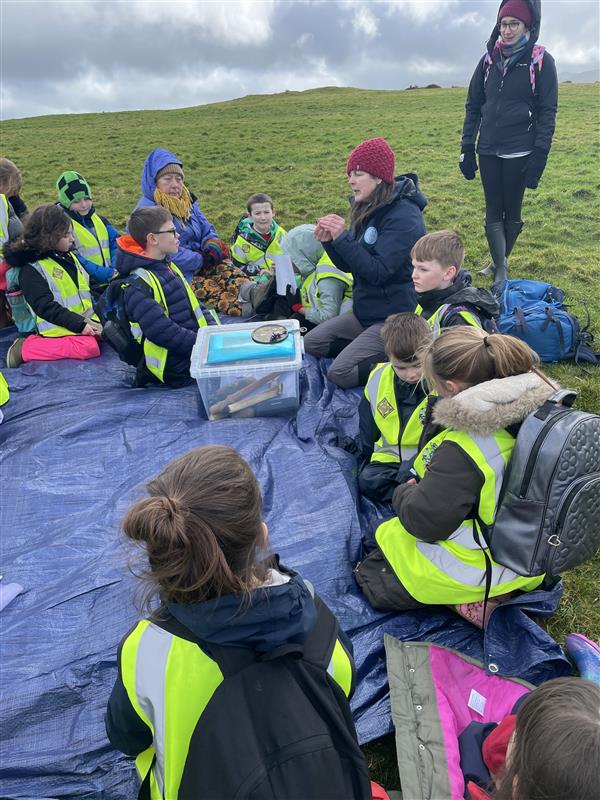
Led by our Education and Outreach Manager, Caroline, the day was jam-packed with hands-on learning, including exploring the hillfort, handling artefacts, and reimagining the past in this archaeological landscape.
Here’s what their teachers said…
“I was really impressed with Caroline’s knowledge and ability to involve all the children… All her resources, pictures, artefacts and knowledge really supported the children’s learning and the ability for staff to lead further sessions.”
“The children were captivated by the sweeping views, the dramatic landscape, and the chance to stand in a place steeped in thousands of years of history.”
“It truly was an amazing trip — one filled with learning, laughter, and awe. Pengelly Class returned to school inspired, informed, and buzzing with excitement about everything they had discovered.”
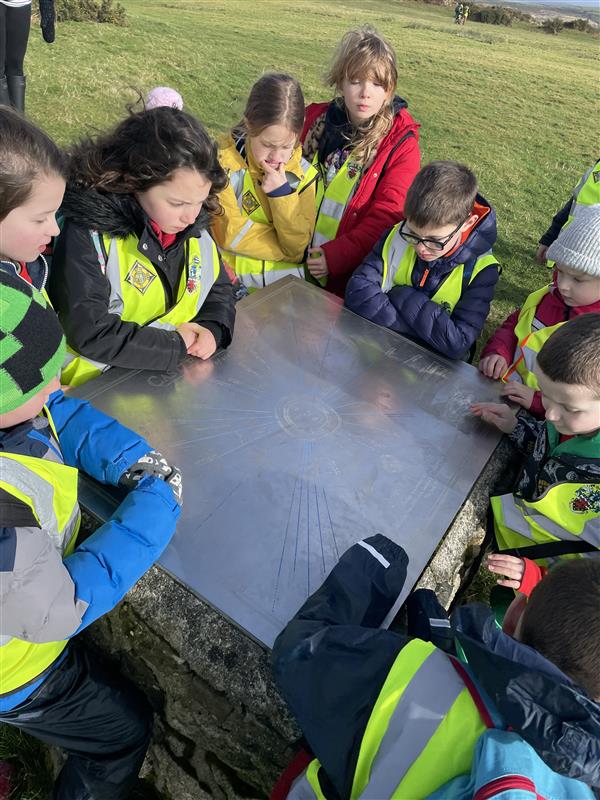
Dating from around the fourth to first centuries BCE, Castle an Dinas is sited in an imposing position on the summit of Castle Downs with extensive and panoramic views across central Cornwall to both north and south coasts.
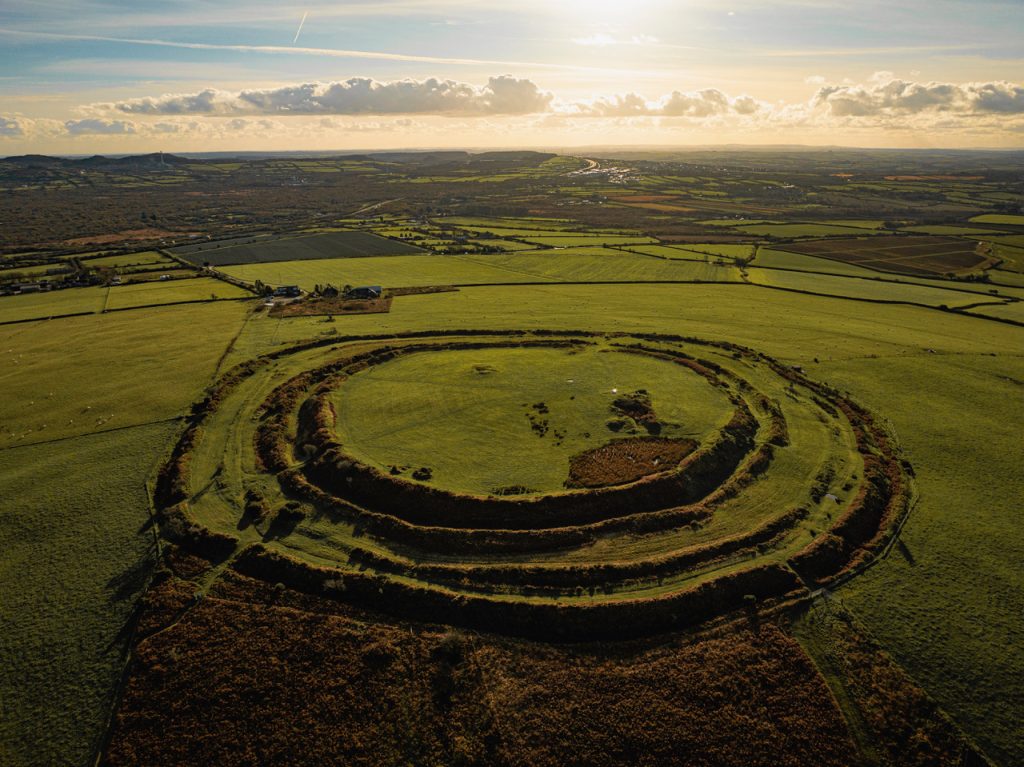
Flint artefacts from the later Mesolithic period (before 4000 BCE) and surviving Bronze Age barrows indicate that people had gathered on this dominating hill from early prehistoric times. The third rampart from the centre may be earlier than the main Iron Age ones and be the remains of a later Bronze Age or early Iron Age precursor to the hillfort.
The workshop was provided free of charge as part of our Discovery Workshops Programme. This programme is part-funded by The National Lottery Heritage Fund and The National Lottery Community Fund.

Transport for the trip was funded by our School Transport Grants Scheme. Cornish Lithium is the foundation sponsor for this academic year’s grants.
The school said…
“The cost of the coach was over £400… The transport grant was a huge help to us and made it affordable for every parent.”

We offer a wide range of free and subsidised workshops at our historic sites as part of our Discovery Programme, and feedback like this shows what inspiring learning experiences they are.
Our on-site workshops are provided to schools, alternative education provision and community groups free of charge. For those struggling with the cost of petrol and vehicle hire, you can also apply for one of our transport grants to support your visit.
The opportunity to explore Cornwall’s heritage is now right at your fingertips, thanks to our new virtual map of the historic sites in our care. The map includes drone footage, 3D models and a wealth of information about these special places.

This digital interpretation aims to offer an innovative way for people to ‘visit’ the sites we care for and will also be an invaluable tool for our education and outreach programme.
This digital interpretation project has been funded by the National Lottery Heritage Fund, the Rural Prosperity Fund and GWR.
We’re hugely grateful for their support and hope you enjoy discovering some of Cornwall’s most iconic and important monuments, buildings and landscapes online.


We’re so pleased to hear how much the children from Heamoor Community Primary School learnt on their recent ‘Discovery Workshop’ at Carn Euny, one of the best-preserved ancient villages in the south-west.

This is what their teachers said…
“The children had the opportunity to see what life in prehistoric Britain looked like through engaging and thought-provoking activities.”
“They were able to observe, touch and explore prehistoric life when holding and discussing artefacts from the past and exploring the remains of an ancient village.”
“The expertise and knowledge that Caroline brought to the workshop was invaluable in helping the children to broaden their understanding.”

Led by our Education and Outreach Manager, Caroline, the day was jam-packed with hands-on learning, including exploring the ancient village, handling artefacts, and reimagining the past in this archaeological landscape.

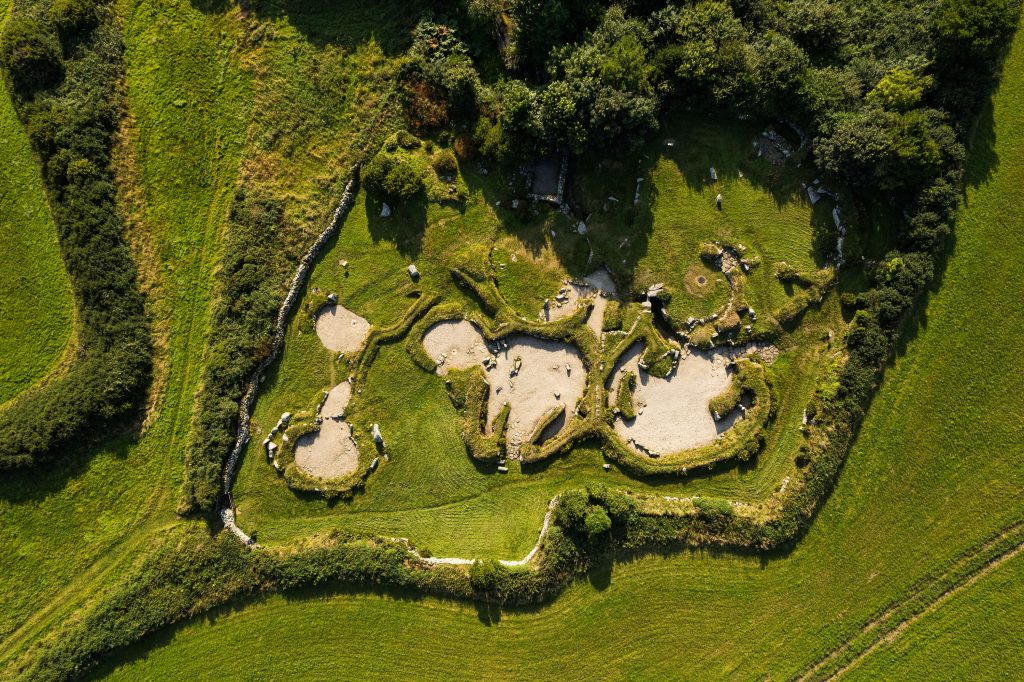
Carn Euny is a courtyard house settlement from the Iron Age and Romano-British periods, occupied from about 500 BCE to 400 CE.
It consists of a number of “courtyard houses” of a type unique to West Cornwall. Rooms, huts, workshops and stables are built around a central courtyard, with a substantial doorway leading from the courtyard to the lanes and “streets” of the village.
Here’s what the students said…
“I enjoyed exploring a place I’ve never been to before.”
“I really enjoyed looking in the fogou.”
“I enjoyed looking at ancient objects.”

“I liked holding things and know that ancient people used them in their daily lives.”
“I had never heard of a fogou. I loved it!”
“I learned that people used animal bones to fish with.”

The workshop was provided free of charge as part of our Discovery Workshops Programme. This programme is part-funded by The National Lottery Heritage Fund and The National Lottery Community Fund.
We offer a wide range of free and subsidised workshops at our historic sites as part of our Discovery Programme, and feedback like this shows what inspiring learning experiences they are.
Our on-site workshops are provided to schools, alternative education provision and community groups free of charge. For those struggling with the cost of petrol and vehicle hire, you can also apply for one of our transport grants to support your visit.
A project to enable greater accessibility to West Penwith’s historic sites is now in full swing, thanks to a grant from the Cornwall National Landscape Access for All Programme.

Cornwall Heritage Trust’s ‘Access All Areas!’ project has seen the charity acquire a 4-wheel drive, all-terrain vehicle to provide a method of transporting people and equipment across the more challenging tracks and ground at some of the places we look after, own or manage.
It will enable those with mobility issues to enjoy greater access to the historic sites owned or managed by the charity and to participate in activities and events within the landscape, which would previously have been more difficult or impossible to take part in.
It will also facilitate the work of its Practical Tasks group – a weekly volunteer working party which maintains access to historic sites around West Penwith owned by other organisations and local landowners.
The Trust’s Rangers and Countryside Worker Apprentices will also utilise the vehicle when managing and hosting volunteering sessions at the charity’s sites in West Cornwall, which are especially remote areas with uneven topography.
The vehicle headed out for the first time last week with the Practical Tasks group and we’re looking forward to seeing its impact over the coming months and years.
This project aims to have a long-lasting impact by breaking down accessibility barriers and enabling a wider range of people to visit and benefit from our sites. It will prove invaluable in helping us to grow the reach of the Practical Tasks scheme and hugely benefit the historic environment and National Landscape in West Penwith by enabling us to facilitate volunteering opportunities and practical interventions across the often difficult terrain that forms the landscape there.
We’re hugely grateful to the Cornwall National Landscape Access for All Programme for making this project possible!

Classic Cottages has once again pledged support to Cornwall’s rich and distinct heritage by renewing its top-level membership of Cornwall Heritage Trust’s ‘Heritage Heroes’ business sponsorship programme.
Cornwall Heritage Trust is an independent charity that cares for 20 historic sites across Cornwall, ensuring they are archaeologically protected, ecologically improved, and freely accessible to everyone. It also hosts a wide-reaching programme of wellbeing, education and community workshops, activities and events at these places and provides grants enabling visits to museums and historic monuments across Cornwall.
The charity’s ‘Heritage Heroes’ programme supports this work to rescue at-risk monuments, protect endangered historic landscapes and give everyone access to Cornwall’s heritage.
Cornwall Heritage Trust Fundraising Officer, Antonia Mullaly, said: “Our ‘Heritage Heroes’ make a huge difference to the reach and impact of our charitable work, and we’re hugely grateful for Classic Cottage’s continued support! By supporting the programme, they are helping safeguard the futures of irreplaceable monuments and landscapes and investing in Cornwall’s culture, communities and landscapes.”

We are thrilled to announce that our independent charity is now caring for a former 19th-century engine house on Bodmin Moor, which in the 1990s was partially restored as a heritage centre for the surrounding area.

Cornwall Heritage Trust has taken ownership of Houseman’s Engine House – part of the 19th-century South Phoenix mine complex, which was transformed into Minions Heritage Centre in the 1990s. The centre closed in early 2020 and the building is not currently open to the public.
The site has been transferred to the charity from Cornwall Council.
Founded in 1985, the Trust protects historic places across Cornwall, which are all free for the general public to visit. It hosts a wide-reaching programme of wellbeing, education and community workshops, activities and events at these heritage sites and provides grants enabling visits to museums and historic monuments across Cornwall.
Houseman’s Engine House was likely constructed in 1881 and named in honour of the Company Chairman at the time. It sat over Houseman’s Shaft and was built for the last big pumping engine made in Cornwall. This was fabricated at Holman’s Foundry in Camborne.
The mine survived for longer than many of its neighbours but, by 1898, it was abandoned and the equipment sold for scrap and most of the buildings demolished.
The engine house was purchased and restored by Caradon District Council in the 1990s as part of the Minions area heritage project. The project saw the building transformed into Minions Heritage Centre, a free-to-visit exhibition about the history, archaeology and ecology of the surrounding area. The centre was closed in early 2020.
In 2024, Cornwall Heritage Trust undertook a project in conjunction with Cornwall Council to establish solutions to issues with the building, which could potentially result in the reopening of this invaluable community space and visitor attraction.
Community Consultation
Now that the charity has taken ownership of the site, it will be hosting a community consultation day on Tuesday 3rd March from 1–3.30pm.
Due to the current closure of Linkinhorne Parish Hall, the consultation will take place at Darite Village Hall, Darite, Liskeard, Cornwall, PL14 5JH. A second consultation will take place later this year within Linkinhorne Parish.
The consultation is not only an opportunity for the local community to meet the charity’s team, but also to offer ideas and suggestions for the future of the site, as well as information on its history and place in the local community.
The charity has already met with the local councillor and reached out to the parish council. It will continue to work closely with them and other stakeholders throughout this process.
It is with great sadness that we share the news of the death of Moira Tangye at the age of 90.

Moira was a founder member of Cornwall Heritage Trust and Chairman between 1991 and 1994. She became Honorary Life Vice President in 1995 in recognition of her support for the Trust and continued as a trustee until she retired in 2009.
A Bard of the Gorsedh, Moira was well known for her work on Cornish miners and the wider story of Cornish migration overseas. She was a contributor to the Cornish Global Migration Project (CGMP), an initiative of Redruth 2000 that documents Cornish miners and migrants around the world.
Through her marriage to the writer, Nigel Tangye, her association with Newquay and the north coast of Cornwall spanned more than sixty years.
She was a member of organisations such as the Cornwall Family History Society, and actively supported charities connected to Multiple Sclerosis and Huntington’s Disease after friends were affected. After Nigel’s death, she carefully preserved the Tangye family archives and went on to write her own book on the history of St Ervan Parish.
Her commitment to Cornwall and contribution to the protection of its unique heritage were huge. She will be much missed and we send our deepest sympathies to her family and friends.
Her funeral will be held on Friday 20th February 2026 at 10.30am at the Most Holy Trinity Catholic Church, Newquay, and all are welcome to attend.
Image description – Moira planting trees at Trewince in 1992 as part of a CHT fundraiser
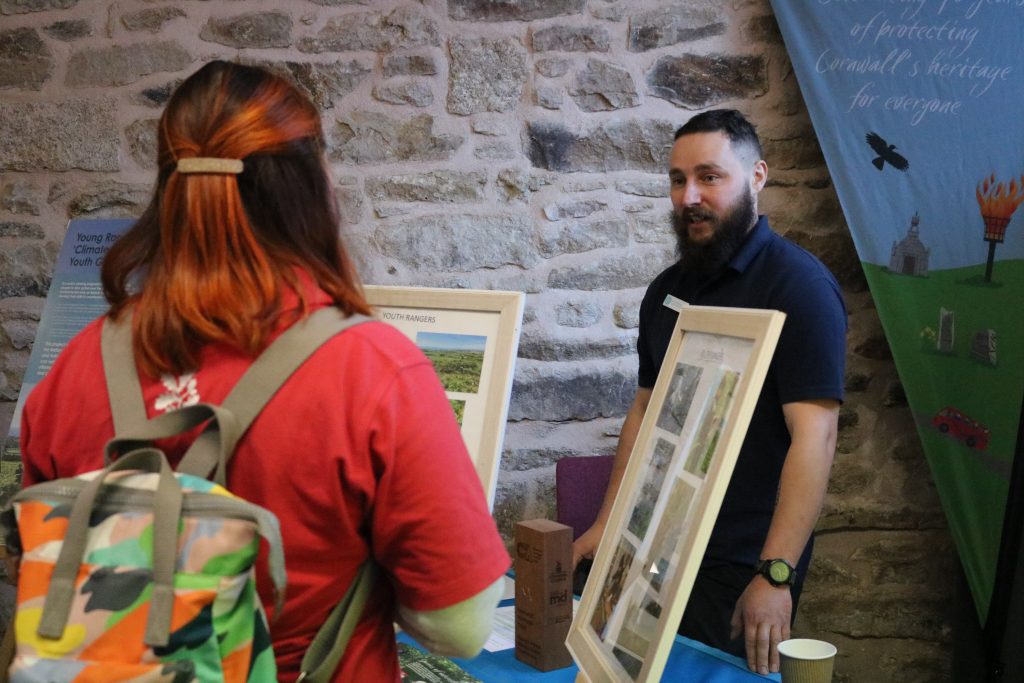
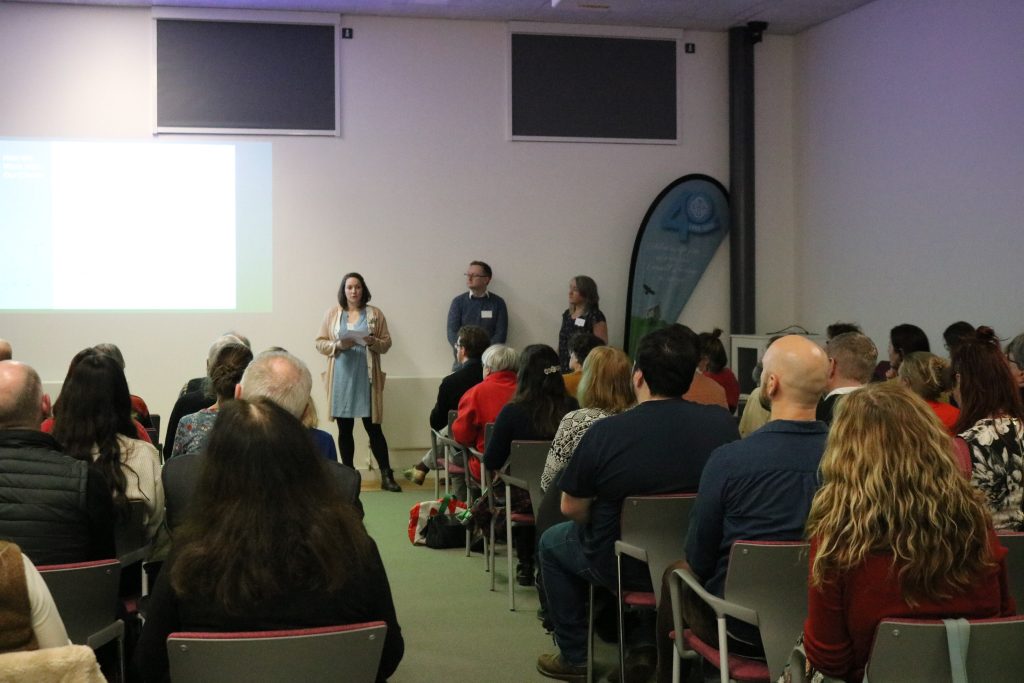
Cornwall Heritage Trust hosted a special event to encourage heritage sector collaboration last week in celebration of its 40th anniversary year.
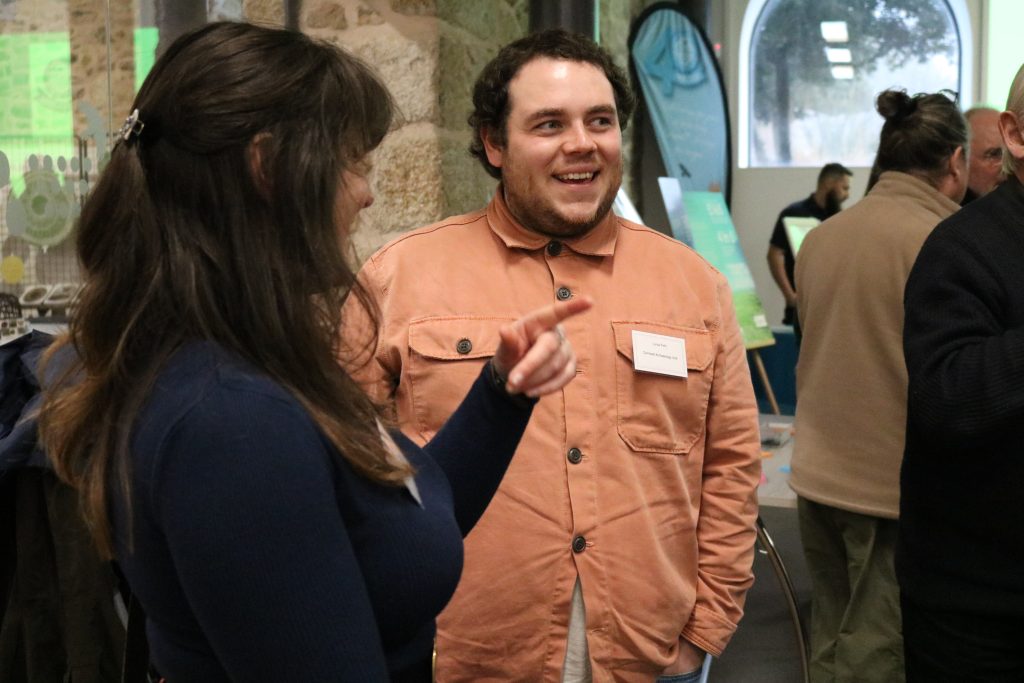
The independent charity’s Progress and Pathways Day was hosted at Kresen Kernow, Cornwall’s archive centre, and was sponsored by Poynton Bradbury, trusted specialists in architecture and conservation.
Bringing together leaders and key decision-makers from across the heritage sector, the event aimed to spark meaningful conversations about collaboration, including how heritage organisations, partners and businesses can work together to support Cornish heritage into the future.
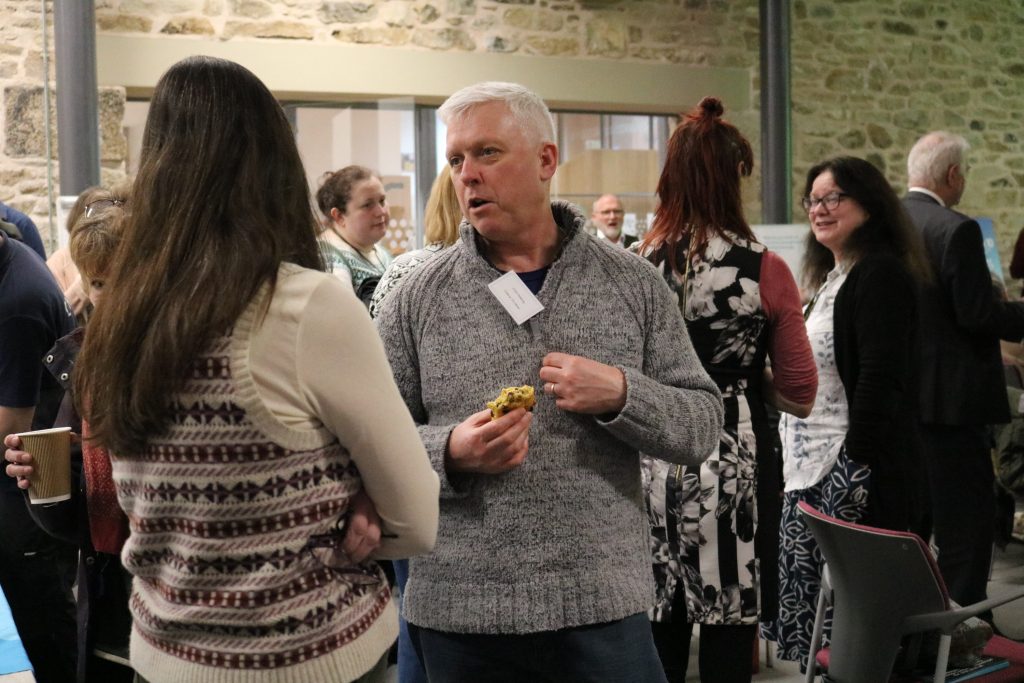
The day was part of a packed calendar of events which celebrate the charity’s 40th anniversary.
It included a wide variety of talks and activities, including…
- A look back over the last 40 years of Cornwall Heritage Trust’s charitable work with Cathy Woolcock, CEO. This explored the charity’s strong legacy of protecting Cornwall’s past and its ambitious plans to broaden reach, deepen community impact and strengthen the future of Cornwall’s heritage.
- An insight into training and apprenticeships with James Shipway, the charity’s recently-qualified Countryside Ranger and leader of its Young Rangers climate action group. 2025 was an exciting year for James, seeing him graduate from his Level 4 Countryside Ranger Apprenticeship with flying colours and being named as ‘Higher/Degree Apprentice of the Year’ at Bridgwater and Taunton College.
- A deep dive into the collaborative work undertaken between Cornwall Heritage Trust and Kresen Kernow, which resulted in the Pobel ha Leow / People and Places exhibition. The exhibition, which runs until February 2026, delves into the Kresen Kernow Collection and the archive of Cornwall Heritage Trust to explore the varied roles that the sites in the charity’s care have played for Cornwall’s communities over time.
- An exploration of adapting heritage assets for the future with Poynton Bradbury Architects. Drawing on 50 years of experience working with some of Cornwall’s most significant sites, this explored a wide range of topics, including access and inclusion, responding to the climate crisis, reuse and transformation, use of local materials, community identity and the importance of context and setting.
- A reflection on the challenges and opportunities for the Cornish heritage sector from Ann Reynolds, Cornwall Council Strategic Historic Environment Senior Officer.
Cornwall Heritage Trust Engagement Manager, Sophie Meyer, said: “From the cost of living crisis to the impact of climate change, the Cornish heritage sector faces unprecedented challenges right now, and that’s why it’s so important to work together to secure its future and ensure it thrives. We’re hugely grateful to everyone who joined us for the day and to Poynton Bradbury for sponsoring the event. I’m really looking forward to seeing the results of the conversations started here.”
Laura Highton, RIBA Specialist Conservation Architect and Poynton Bradbury Director, said: “We were delighted to continue our support of Cornwall Heritage Trust through the sponsorship of this event. It was a fascinating afternoon, with a series of enlightening talks and activities that truly engaged the audience with the distinctiveness and special character of Cornwall’s heritage assets. The day encouraged collaboration, mutual support, and the development of skills and training across the sector, while also providing valuable insight into the Trust’s latest projects and achievements.”
This event was sponsored by

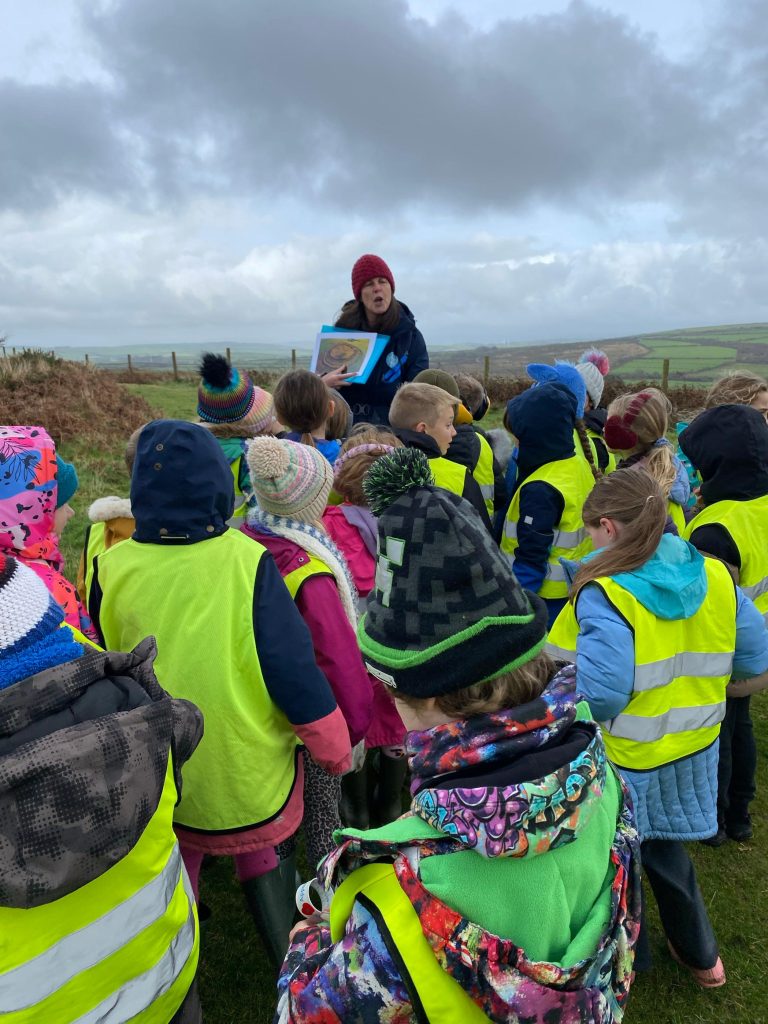
The children from Trevisker Primary School stepped back in time at Castle an Dinas (East) during their recent ‘Discovery Workshop’ and we’re thrilled to hear what a wonderful time they had!
Here’s what the students said…
“We had a brilliant time and talking about our school being near an Iron Age site was awesome.”
“Really interesting and used good ways (visuals) for us to understand how it used to look.”
“Liked the bags with the items from the Iron Age.”
Led by our Education and Outreach Manager, Caroline, the day was jam-packed with hands-on learning which included exploring the ancient hillfort, handling artefacts and reimagining the past in this archaeological landscape.
Located on the summit of Castle Downs near St Columb Major, Castle an Dinas is one of Cornwall’s largest and most impressive hillforts. This imposing hilltop monument dates from around the fourth to first centuries BCE.
Hillforts like this are thought to have been a focus for the community, symbols of the wealth and power of the tribe, and a central place for social ceremonies, trade and ritual.
The workshop was provided free of charge as part of our Discovery Workshops Programme. This programme is part-funded by The National Lottery Heritage Fund and The National Lottery Community Fund.
We offer a wide range of free and subsidised workshops at our historic sites as part of our Discovery Programme, and feedback like this shows what inspiring learning experiences they are.
Our on-site workshops are provided to schools, alternative education provision and community groups free of charge. For those struggling with the cost of petrol and vehicle hire, you can also apply for one of our transport grants to support your visit.
Cornish Metals has pledged its support to Cornwall’s landscape, traditions and communities by becoming the ‘Heritage Guardian’ of Caer Bran, a multi-period hilltop site in Penwith which contains archaeological remains from both the Bronze Age and Iron Age periods.
The Cornish mineral exploration and development company is the second organisation to join Cornwall Heritage Trust’s ‘Heritage Guardian’ Programme.
Located 5 miles west of Penzance, Caer Bran is a multi-period hill-top site which contains archaeological remains from both the Bronze Age and Iron Age periods, principally an early Bronze Age hilltop enclosure with ring cairns and an unusually unfinished Iron Age hillfort.

The massive earthworks you can see there today were probably intended to create a gathering place, a status symbol and a defendable fort. However, the work stopped before the western side was complete, and Caer Bran was abandoned.

It was purchased by our charity in 2022 and saved from the Heritage at Risk Register in 2024, thanks to our successful interventions.
It is one of 19 historic sites cared for by Cornwall Heritage Trust – an independent charity which archaeologically protects, ecologically improves and makes freely accessible Cornish heritage for everyone. It also hosts a wide-reaching programme of wellbeing, education and community workshops, activities and events at these places and provides grants enabling visits to museums and historic monuments across Cornwall.

Cornwall Heritage Trust Fundraising Officer, Antonia Mullaly, said: “Our charity has been protecting and sharing Cornwall’s historic places for the last 40 years, and the support of our ‘Heritage Guardians’ is absolutely vital in helping us continue that work for the next 40 years and many more to come.”
“We’re hugely grateful to Cornish Metals for partnering with us as part of the programme. So many Cornish heritage sites urgently need our help and their support means we can save these places, improve them and share them with Cornish communities. We’re thrilled to have them on board.”

Cornish Metals CEO, Don Turvey, said: “Becoming a Heritage Guardian of Caer Bran is something we’re extremely proud of. Caer Bran is an important part of Cornwall’s story, and partnering with the Cornwall Heritage Trust allows us to play a meaningful role in safeguarding this special and historic place. Protecting and celebrating Cornwall’s heritage is vital, and this partnership reflects our commitment to supporting its history, landscapes, and communities for future generations.”

There was much ‘infernal noise’ and merriment at Duloe Stone Circle this week as we awakened our newly planted ‘Avallan Rubi / Ruby Orchard’ from its winter slumber at our Wassail.

The Cornish Wassail dates back beyond the 14th century and is a tradition which aims to encourage a good harvest by waking the apple trees and toasting them with cider.
This event was a collaboration between Cornwall Heritage Trust and Liskeard Old Cornwall Society.
Thank you to everyone who, despite the wet weather, joined us with their musical instruments, pots and pans to scare away any ‘evil spirits’ that may prevent a good harvest this Autumn.

The festivities included a parade and traditional dancing led by Merv and Alison Davey, readings in Cornish and English, and toasting of the apple trees with mugs of cider.
It was rounded off with rousing renditions of the ‘Wassail Chant’ – written by Richard Polwhele 200 years ago – and ‘Trelawny’.

The orchard has recently been planted at the north-east end of the field, where the Duloe Stone Circle stands. We hope it will increase biodiversity on the site, become a focus of local festivities and produce apple crops which our charity will use at our annual Allantide events.
It includes a wide range of Cornish Heritage varieties, including Ben’s Red, Cornish Queen, Manaccan Primrose, Hocking’s Green, Cornish Aromatic, Cornish Pine, Tregonna King and Cornish Gilliflower.

The planting was funded by Cornwall Council’s Forest for Cornwall Programme and Cornwall Community Foundation through the Caradon Area Community Fund.