Bronze Age Sword Casting Workshop
Suitable for those aged 16 and over
Join Dr James Dilley, an experimental archaeologist and craftsman, to cast your own sword and learn more about how they were made in the Bronze Age.
Date: Friday 11th September 2026
Time: 10am – 4pm
Location: Enys Gardens, St Gluvius, Penryn, TR10 9LB – What3Words: ///diplomat.ooze.quite
Price: £250 per person
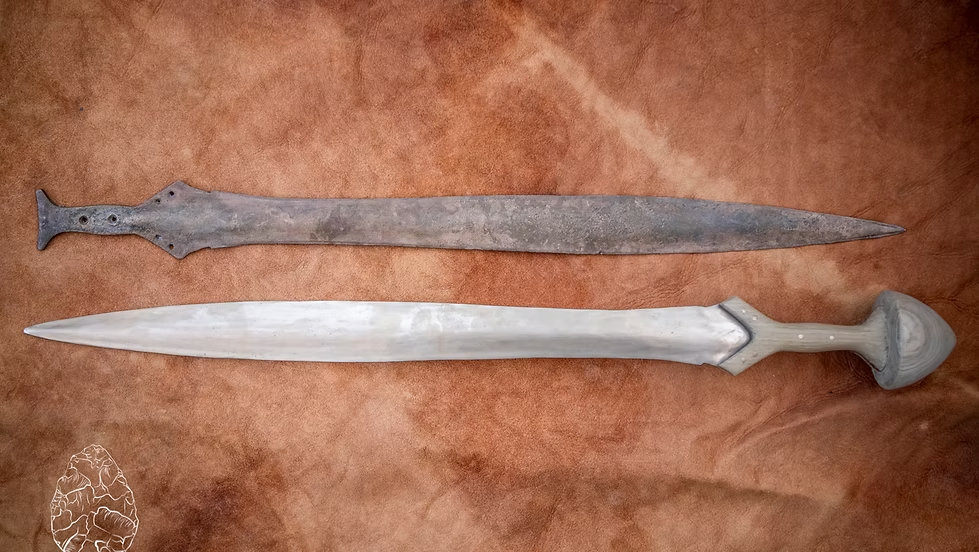
The first swords in Europe were made of bronze. They are an iconic development in the human story as social pressure led to tension between groups and individuals. Swords were as much a tool of fighting as they were status symbols. During the workshop, participants will cast a replica of a late Bronze Age Ewart Park sword. These were made and used from 1000 – 700 BC, and have been found across Britain and occasionally further afield. With many different types of late Bronze Age sword in circulation at this time, the Ewart Park is very much a ‘British’ style.
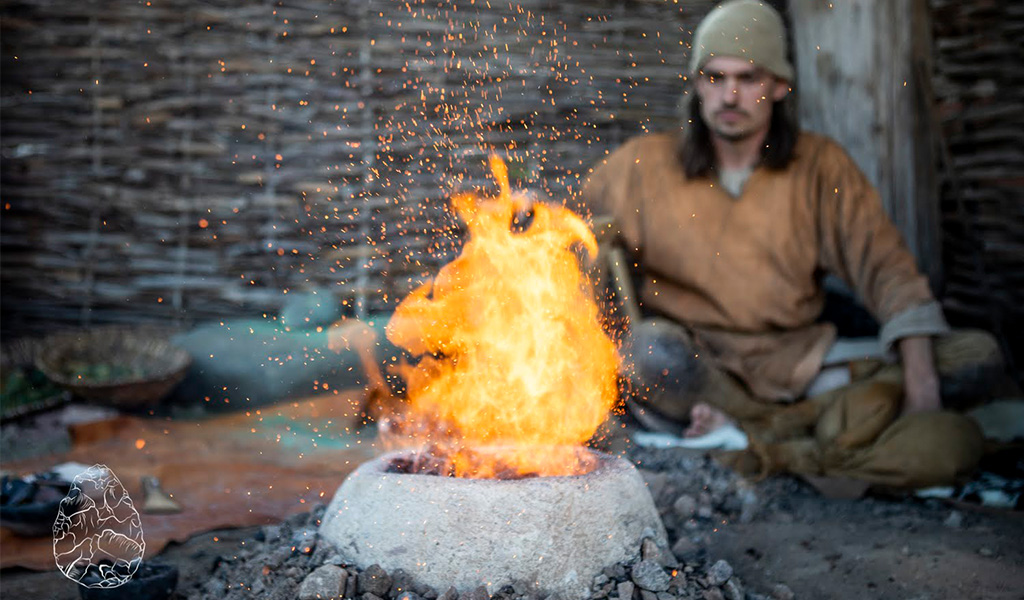
Workshop students will prepare their own mould, before working the leather bellows on the charcoal fuelled furnace to melt bronze. They will then cast the liquid metal into their prepared moulds to produce a replica bronze age sword to take home at the end of the day. Students can then begin filing off the casting flash and start cleaning the surfaces of the sword.
The workshop also includes a brief talk to contextualise the Bronze Age and swords at the time. Handle-making kits will be available to purchase at the end of the workshop.
Dr James Dilley from Ancient Craft will lead this small group workshop with just 4 participants. Early booking is recommended to avoid disappointment.
Refreshments will be provided, but please bring your own lunch.
This event is in aid of Cornwall Heritage Trust – the small, independent charity protecting Cornwall’s heritage for everyone.
About Dr James Dilley
Dr James Dilley is an experimental archaeologist and craftsman, specialising in prehistoric technologies. He founded AncientCraft in 2009 and since then he has gained a PhD in Archaeology at the University of Southampton and has worked with numerous museums, schools and heritage sites. His work is displayed at The British Museum and Stonehenge and he has worked with several high profile media companies such as the BBC, National Geographic, New Scientist and Dorling Kindersley Publishing. More information about him can be found here www.ancientcraft.co.uk/james-dilley