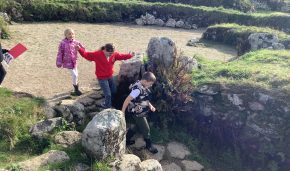
Feedback like this is what our Discovery Programme is all about!
“I loved going underground – that was my favourite part. No one knows what it’s for!”
“I liked learning how they made flour with the quern stones.”
“I thought the quern stones were prehistoric toilets. So wrong!”
“I liked exploring the stone houses and learning how they used flint for tools.”
“I enjoyed getting to hold the artefacts.”
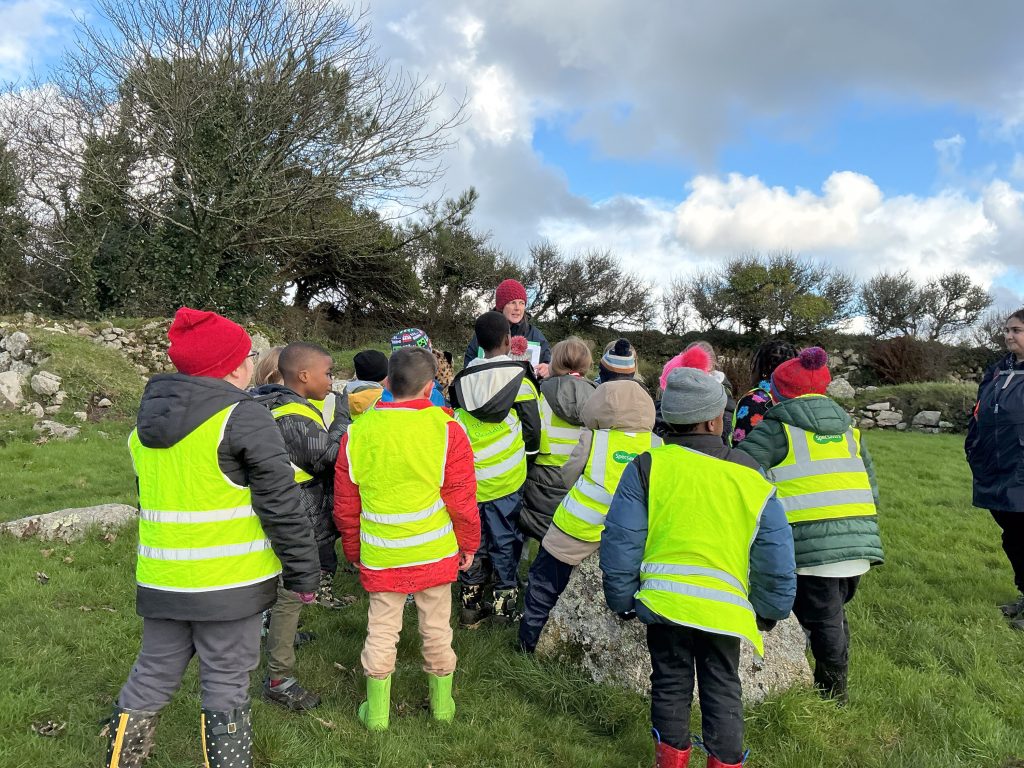
We’re so pleased to hear how much the children from Tregolls Academy learnt on their recent ‘Discovery Workshop’, exploring two fascinating ancient sites in Penwith – Carn Euny and Caer Bran.
Led by our Education and Outreach Manager, Caroline, it was a busy day of hands-on learning, including exploring the ancient village, handling artefacts and reimagining the past in this archaeological landscape.

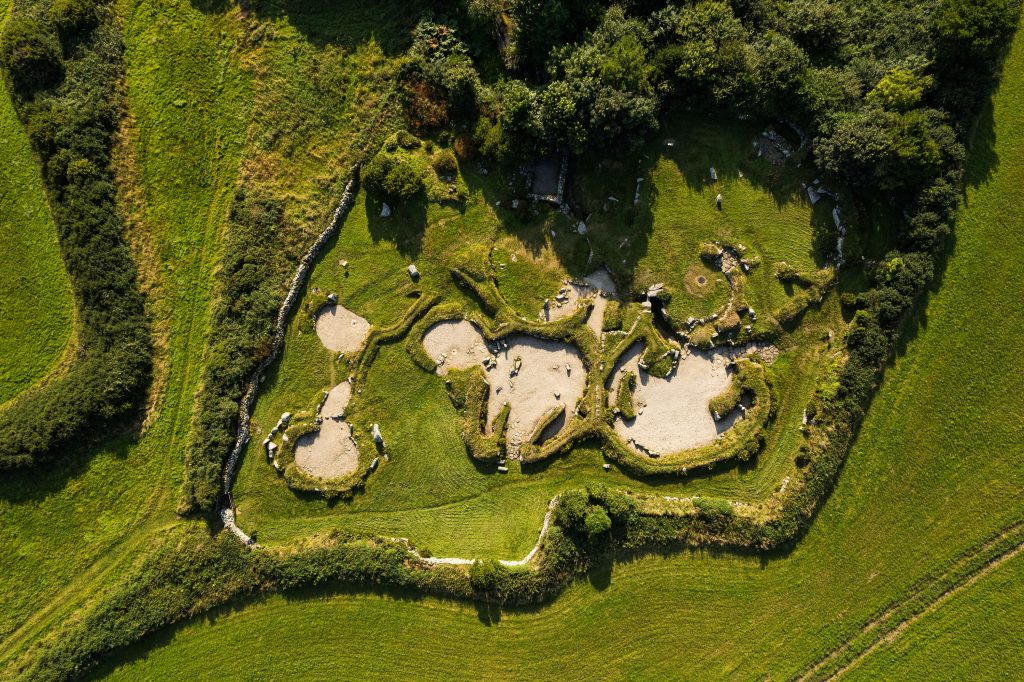
Caer Bran is a multi-period hill-top site which contains archaeological remains from both the Bronze Age and Iron Age periods, principally an early Bronze Age hilltop enclosure with ring cairns and an unusually unfinished Iron Age hillfort.
Carn Euny is one of the best-preserved ancient villages in the South West. It is a courtyard house settlement of the Iron Age and Romano-British periods and was occupied from about 500 BCE to 400 CE.
Their teachers said…
“The handling objects were a really great [way] to draw together what they had learned, and the activity packs, objects and challenges whilst in the space gave them a focus whilst they explored.”
The workshop was provided free of charge as part of our Discovery Workshops Programme. This programme is part-funded by The National Lottery Heritage Fund and The National Lottery Community Fund.

Transport for the trip was funded by our School Transport Grants Scheme. Cornish Lithium is the foundation sponsor for this academic year’s grants.

We offer a wide range of free and subsidised workshops at our historic sites as part of our Discovery Programme, and feedback like this shows what inspiring learning experiences they are.
Our on-site workshops are provided to schools, alternative education provision and community groups free of charge. For those struggling with the cost of petrol and vehicle hire, you can also apply for one of our transport grants to support your visit.
St Eval has pledged its support to Cornwall’s unique and distinct heritage by becoming the ‘Heritage Guardian’ of Castle an Dinas (East), one of Cornwall’s most iconic and important hillforts.
The Cornish artisan candle maker is the first organisation to join Cornwall Heritage Trust’s ‘Heritage Guardian’ Programme.
Located on the summit of Castle Downs near St Columb Major, Castle an Dinas is one of the largest and most impressive hillforts in Cornwall. It dates from around the fourth to first centuries BCE.
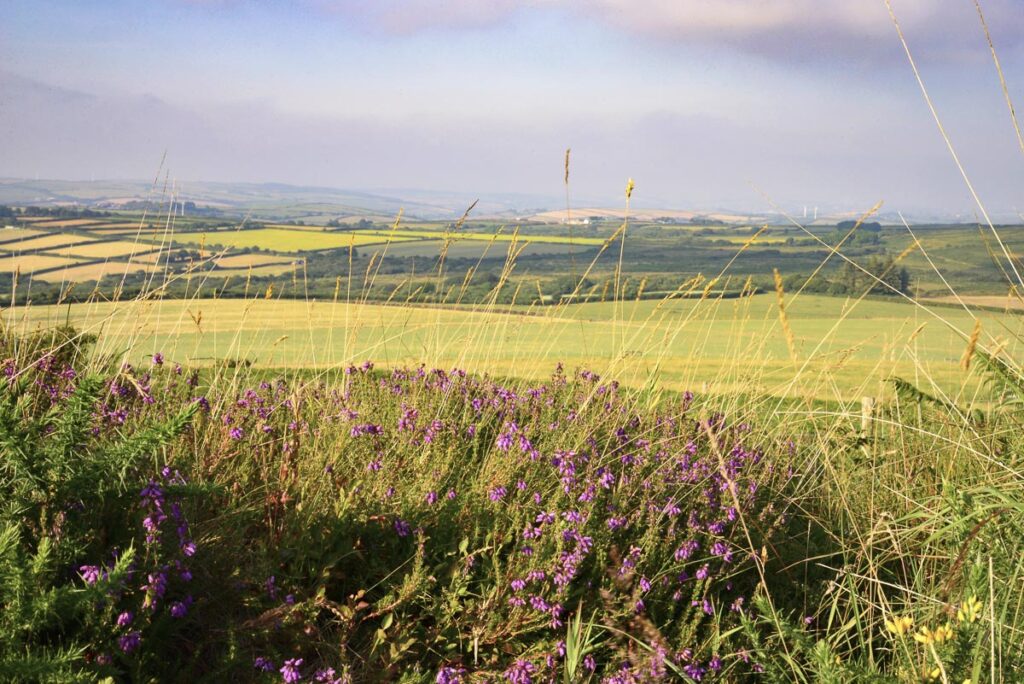
Hillforts like this are thought to have been a focus for the community, symbols of the wealth and power of the tribe, and a central place for social ceremonies, trade and ritual.
The monument is mentioned in Cornish legends as one of the seats of the early Dukes of Cornwall and as the place where Cador, Duke of Cornwall and husband of King Arthur’s mother, met his death. The existence of such legends suggests that this site remained important long after its construction.
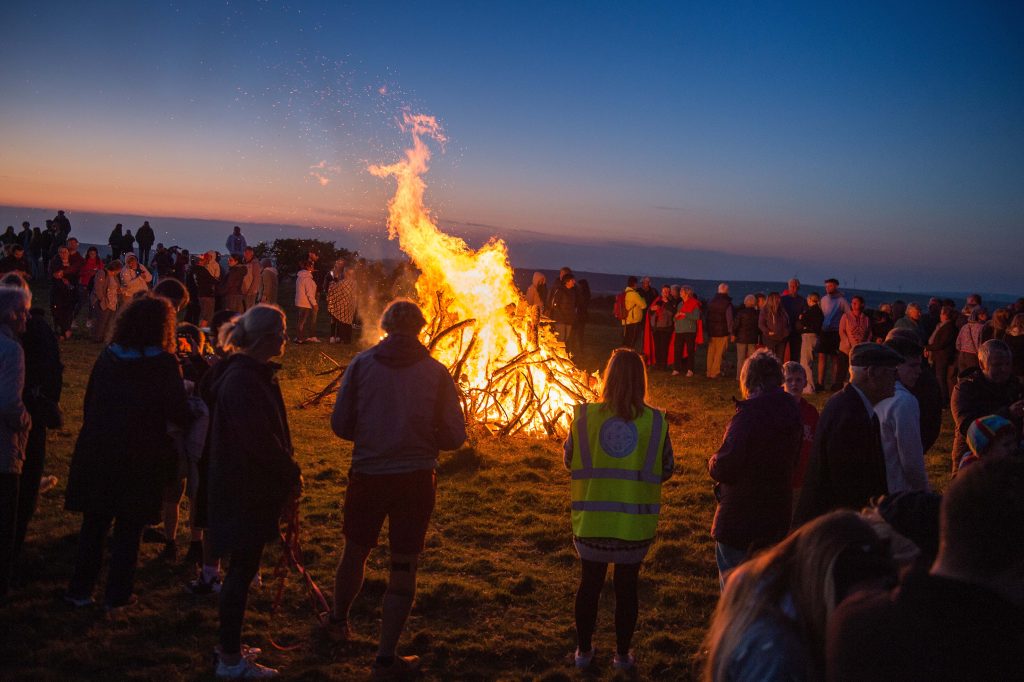
It is one of 19 historic sites cared for by Cornwall Heritage Trust, which works to ensure Cornish heritage is archaeologically protected, ecologically improved and freely accessible to everyone. The independent charity also hosts a wide-reaching programme of wellbeing, education and community workshops, activities and events at these places and provides grants enabling visits to museums and historic monuments across Cornwall.
The charity has launched its ‘Heritage Guardian’ Programme to help continue its work to save Cornwall’s historic sites, improve them and share them, free of charge, with the general public.
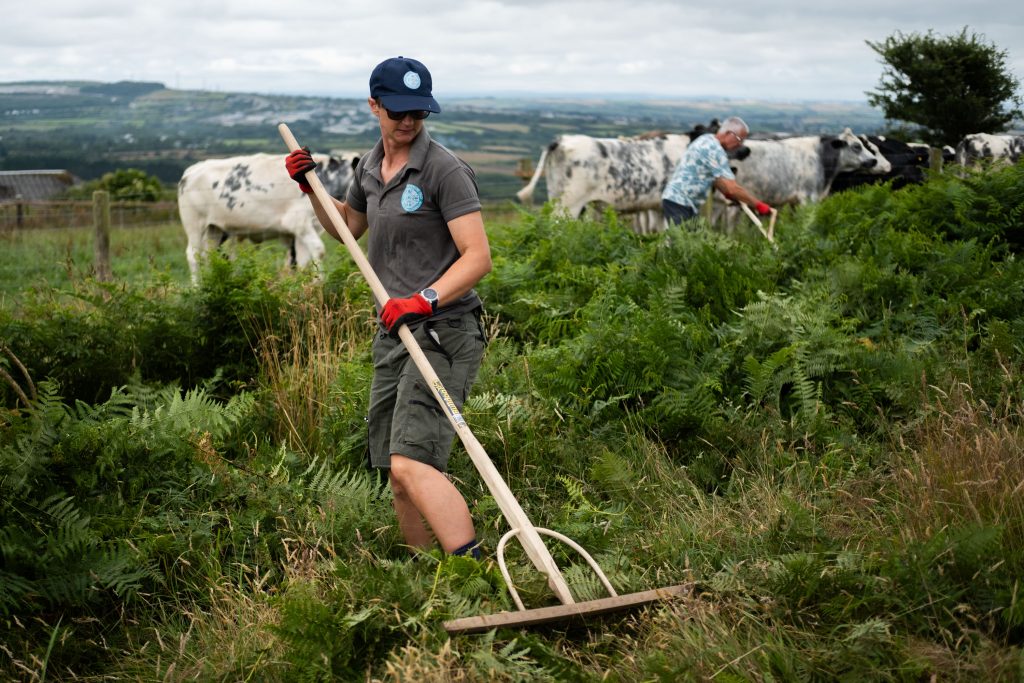
Cornwall Heritage Trust Fundraising Officer, Antonia Mullaly, said: “The historic sites our team looks after are unique and inspiring green spaces for Cornish people to connect with one another and their shared history. Protecting and sharing these assets with everyone is at the heart of everything we do because, despite how important they are to local communities, many are uncared for and under threat.”
“Joining our ‘Heritage Guardians’ Programme is a fantastic and unique opportunity to support this vital work, offering businesses the chance to make a strategic investment in Cornwall’s culture, communities and landscapes, deliver lasting impact with a trusted charity and demonstrate their corporate social responsibility.”
“We’re incredibly grateful to St Eval for partnering with us. As an independent charity, every penny from business partnerships, memberships, donations and funding really does count so their generosity makes a huge difference to our work. We hope many more businesses will see the benefits of this investment in Cornwall’s heritage and come on board.”
St Eval Executive Director, Ian Greaves, said: “We were delighted to support Cornwall Heritage Trust by sponsoring the magical site of Castle an Dinas, a much-loved landmark just a few miles from our farm. Living and working in the Duchy, we are fortunate to be surrounded by such rich history and heritage, and it is inspiring to see Cornwall Heritage working so passionately to preserve these special places for the future.”

An independent, locally owned and run community referral and emergency practice vets – Beacon VetCare – has partnered with us to give its entire team Cornwall Heritage Trust membership.

“Caroline was brilliant with the children and shared her passion for not only the site but history in general.”
The children from Portreath Primary School enjoyed an incredible time-travelling adventure at their recent ‘Discovery Workshop’, during which they explored Carn Euny and Caer Bran.
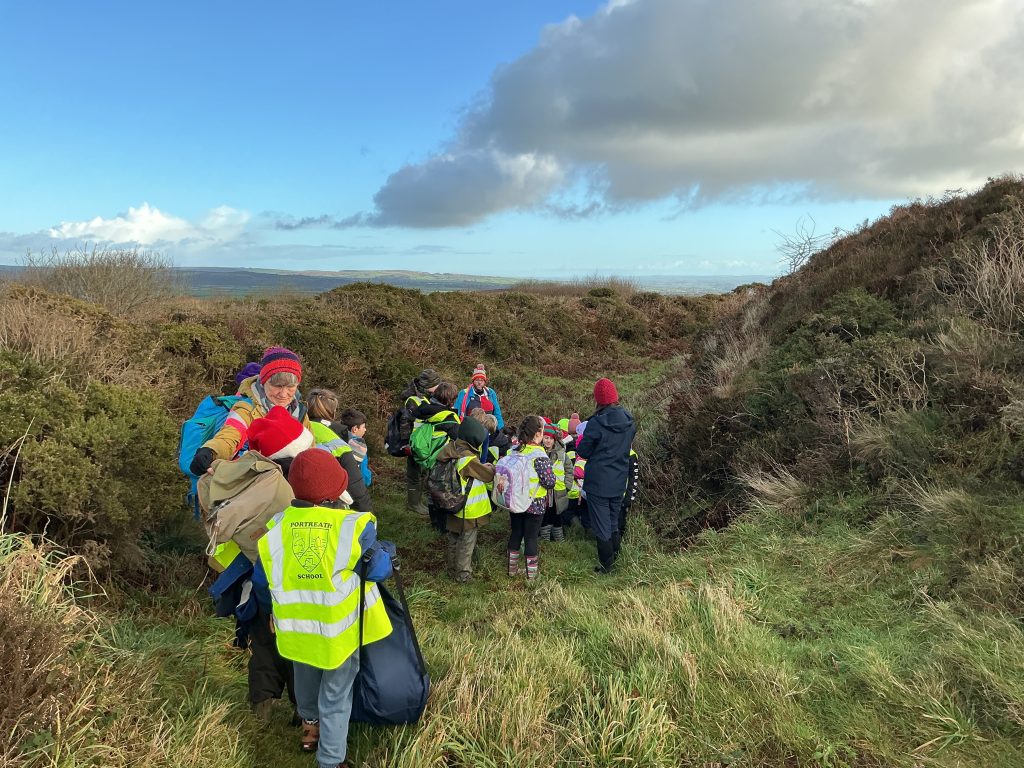
Led by our Education and Outreach Manager, Caroline, it was a busy day of hands-on learning, including exploring the ancient village, handling artefacts and reimagining the past in this archaeological landscape.
Caer Bran is a multi-period hill-top site which contains archaeological remains from both the Bronze Age and Iron Age periods, principally an early Bronze Age hilltop enclosure with ring cairns and an unusually unfinished Iron Age hillfort.
Carn Euny is one of the best-preserved ancient villages in the South West. It is a courtyard house settlement of the Iron Age and Romano-British periods and was occupied from about 500 BCE to 400 CE.
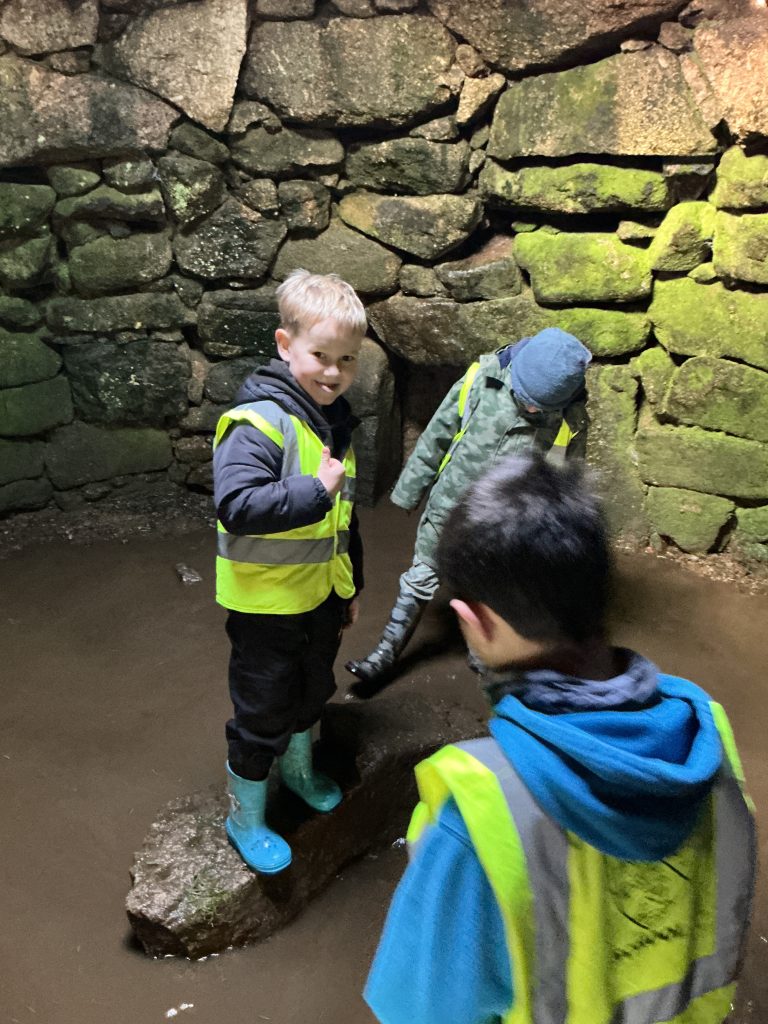
This is what the students said…
“The best part was exploring the Iron Age fort and reading the landscape.”
“I really liked handling the artefacts and finding out how they used.”
“Holding the artefacts was really cool!”
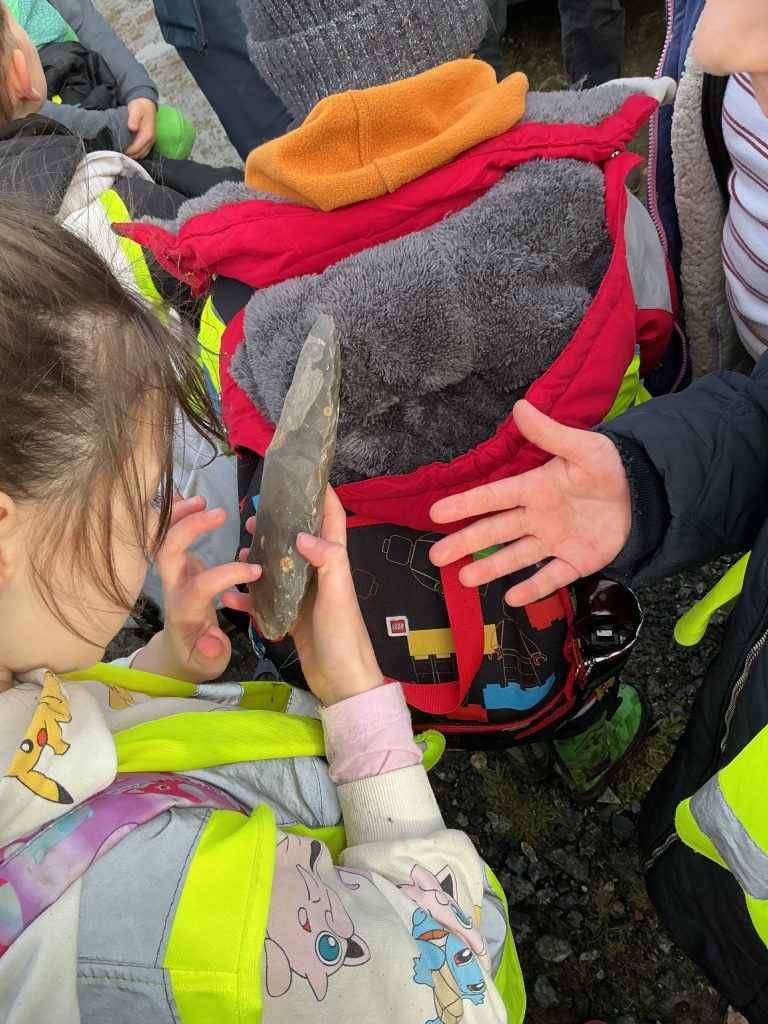
This is what their teachers said…
“[Caroline] was on hand to help with any questions in the preplanning and suggested we visited two sites which was great. ”
“The activities involved the children handling real artefacts which was great. It led to the children getting a real understanding/concept of what life might have been like during these eras. The children loved it and so did the adults! Thank you!”
“I really enjoyed visiting Carn Bran, and it helped the children’s work on hillforts truly come to life. Our time at Carn Euny was equally valuable, and the chance for the pupils to handle real artefacts was fantastic. [Caroline] held their attention and interest throughout the day, and everything was pitched perfectly.”

The workshop was provided free of charge as part of our Discovery Workshops Programme. This programme is part-funded by The National Lottery Heritage Fund and The National Lottery Community Fund.
Transport for the trip was funded by our School Transport Grants Scheme.
“Having the grant was fantastic… transport can be one of the biggest barriers to putting on a trip.”
Cornish Lithium is the foundation sponsor for this academic year’s grants.
We offer a wide range of free and subsidised workshops at our historic sites as part of our Discovery Programme, and feedback like this shows what inspiring learning experiences they are.
Our on-site workshops are provided to schools, alternative education provision and community groups free of charge. For those struggling with the cost of petrol and vehicle hire, you can also apply for one of our transport grants to support your visit.
We are thrilled to announce that our small, independent charity is now caring for a rare Iron Age hillfort and 18th-century folly which enjoy extensive views of Mounts Bay.
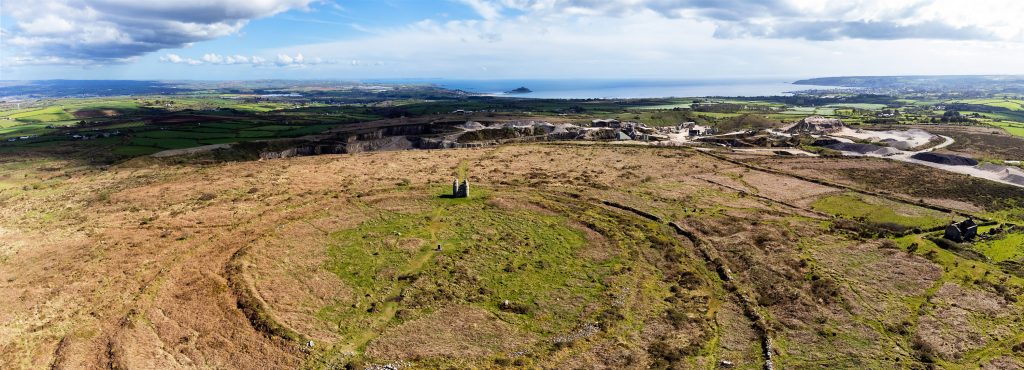
Photo credit – Julian Perry
Cornwall Heritage Trust has taken ownership of Castle an Dinas (West) – a small multivallate hillfort situated at the summit of a broad hill on Tonkins Downs, just north of Penzance. Hillforts of this kind are rare, with around 100 examples recorded across the UK.
Standing prominently on the hillfort’s inner rampart is Rogers’ Tower, a late 18th-century folly built for the Rogers family who owned nearby Treassowe Manor. The tower is a listed building Grade II.
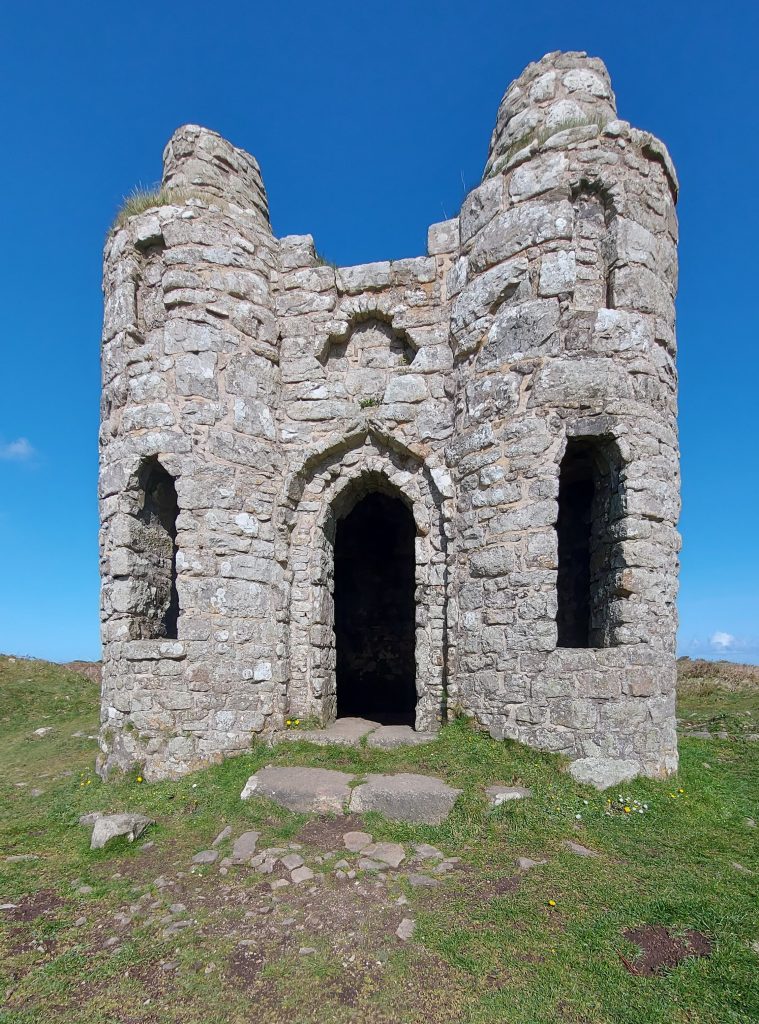
The site has been transferred to the charity from Cornwall Council.
Founded in 1985, the Trust protects historic places across Cornwall, which are all free for the general public to visit. It hosts a wide-reaching programme of wellbeing, education and community workshops, activities and events at these heritage sites and provides grants enabling visits to museums and historic monuments across Cornwall.
In the heathland to the north of the hillfort are the remains of extensive prehistoric and medieval field systems. To the south-west, the small fields of a 19th-century smallholding have utilised the ramparts of the hillfort as part of their field system. Both folly and farmstead are important features in the landscape in this part of Cornwall.
The site lies within Cornwall National Landscape and includes a scheduled area which centres around the hillfort. It is designated as a Site of Special Scientific Interest and Country Wildlife Area, as well as being common land.
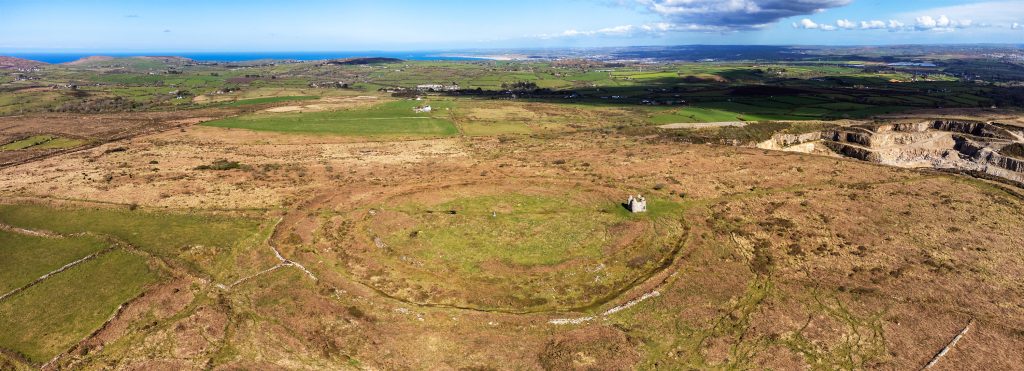
Photo credit – Julian Perry
It is a mix of heathland and high pasture, which is rich in ecological value. Falcons, kestrels and many other interesting species are often seen when visiting the land. An ecological assessment is forthcoming in late spring 2026.
The land has a herd of Ruby Red cows grazing on it in the summer months. We have been reassured that they are docile and used to public and dog walkers.
Join the fight for your heritage today
We’re so proud to now be the custodians of this important historic asset, which joins our growing portfolio of heritage sites.
When we set our targets in 2021 for the number of sites we could sustainably acquire, we aimed to take on one per year. In reality, the collection of sites we own has almost doubled in the last four years and has grown even larger in 2025.
If a historic site needs protecting, we want to help, and that’s why your support is vital in making this happen.
This Christmas, you can help our charity to purchase Castilly Henge – one of the South-West’s most important and best-researched late Neolithic sites – to ensure that it is cared for and made accessible to everyone.

Recently added to the Heritage at Risk Register, invasive vegetation is currently encroaching on the monument – the roots of which can very quickly and seriously damage its structure if not managed regularly. Vegetation such as this also creates a monoculture, which can severely limit biodiversity.
The monument has come on and off the Heritage at Risk Register a number of times due to lack of regular management, and our aim in purchasing the site is to stop this cycle of sporadic intervention and ensure it gets the regular care it needs to be protected for the future.
Our ownership would also mean that it can be open to the public, which it currently is not. All of the sites we care for are free for everyone to visit and accessible all year round, and we want to make this possible for Castilly Henge too.

We are hoping to raise £50,000 to purchase the site and are hugely grateful to those who have already donated and helped us raise nearly £13,000 so far.
Our charity has been protecting historic landscapes and monuments across Cornwall for the last 40 years. We have a strong track record of giving these special places the archaeological and land management expertise they need and have helped save a number from the Heritage at Risk Register. Help us do the same for Castilly Henge!
Whether you are looking for an alternative Christmas gift or want to give back to Cornwall’s communities at this special time of year, your donation will take us one step closer to purchasing Castilly Henge, securing its future through active management and enabling everyone can visit it for free all year round.
As a small, independent charity, every donation makes a huge difference to this urgent appeal, and we would be hugely grateful for your support.
We’re so pleased to hear how much the students from Lanner Primary School enjoyed their recent ‘Discovery Workshop’ at Carn Euny.
Led by our Education and Outreach Manager, Caroline, it was a busy day of hands-on learning, including exploring the ancient village, handling artefacts and reimagining the past in this archaeological landscape.
Their enthusiasm was wonderful to see!

This is what the students said…
“I really enjoyed exploring the village and my favourite part was going into the roundhouses.”
“Visiting Carn Euny has helped me to learn and understand more about the Iron Age.”
“We were able to hold Iron tools from the Iron Age. I found this interesting because we were learning more and more.”
“I really enjoyed the caves since they had interesting artefacts and cool glowing moss that lit up in the dark. Our school trip to Carn Euny was lots of fun and educational.”

This is what their teachers said…
Caroline has “excellent rapport with [the] children, resources, knowledge and range of activities.”
“I gained subject knowledge in the area, too!”

The workshop was provided free of charge as part of our Discovery Workshops Programme. This programme is part-funded by The National Lottery Heritage Fund and The National Lottery Community Fund.
Transport for the trip was funded by our School Transport Grants Scheme. This academic year’s transport grants are part-funded by Cornish Lithium.
We offer a wide range of free and subsidised workshops at our historic sites as part of our Discovery Programme, and feedback like this shows what inspiring learning experiences they are.
Our on-site workshops are provided to schools, alternative education provision and community groups free of charge. For those struggling with the cost of petrol and vehicle hire, you can also apply for one of our transport grants to support your visit.
We’re so pleased to hear how much the students from Sandy Hill Academy enjoyed their recent ‘Discovery Workshop’ at the Hurler Stone Circles. Led by our Education and Outreach Manager, Caroline, students spent a jam-packed day exploring this amazing ancient monument and it was wonderful to see how excited they were to get stuck in!

Here’s what the students said…
“My favourite thing about the trip was when [Caroline] showed us objects from the Stone Age.”
“My favourite thing about the trip was discovering the very old burial mound.”
“My favourite thing about the trip was counting how many stones there were in a circle.”


The workshop was provided free of charge as part of our Discovery Workshops Programme. This programme is part-funded by The National Lottery Heritage Fund and The National Lottery Community Fund.
Transport for the trip was funded by our School Transport Grants Scheme. This academic year’s transport grants are part-funded by Cornish Lithium.
We offer a wide range of free and subsidised workshops at our historic sites as part of our Discovery Programme, and feedback like this shows what inspiring learning experiences they are.
Our on-site workshops are provided to schools, alternative education provision and community groups free of charge. For those struggling with the cost of petrol and vehicle hire, you can also apply for one of our transport grants to support your visit.
As part of last week’s National Tree Week, our Rangers were busy planting our ‘Avallan Rubi / Ruby Orchard’ project with the help of local schoolchildren and volunteers at Duloe Stone Circle.
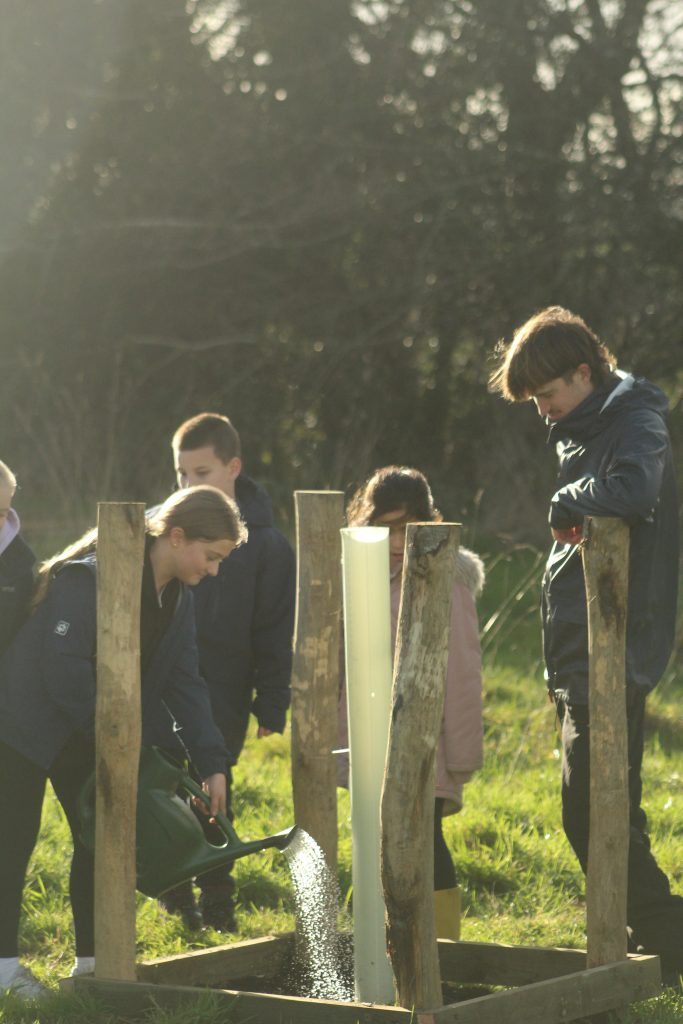
The project saw 16 Cornish Heritage apple trees and 110m of native hedgerow planted at the north east end of the field, where the monument stands.
It was made possible by a grant of £5,423.55 from Cornwall Council’s Forest for Cornwall Programme and a grant of £1,457 from Cornwall Community Foundation through the Caradon Area Community Fund. We’re hugely grateful for their support!
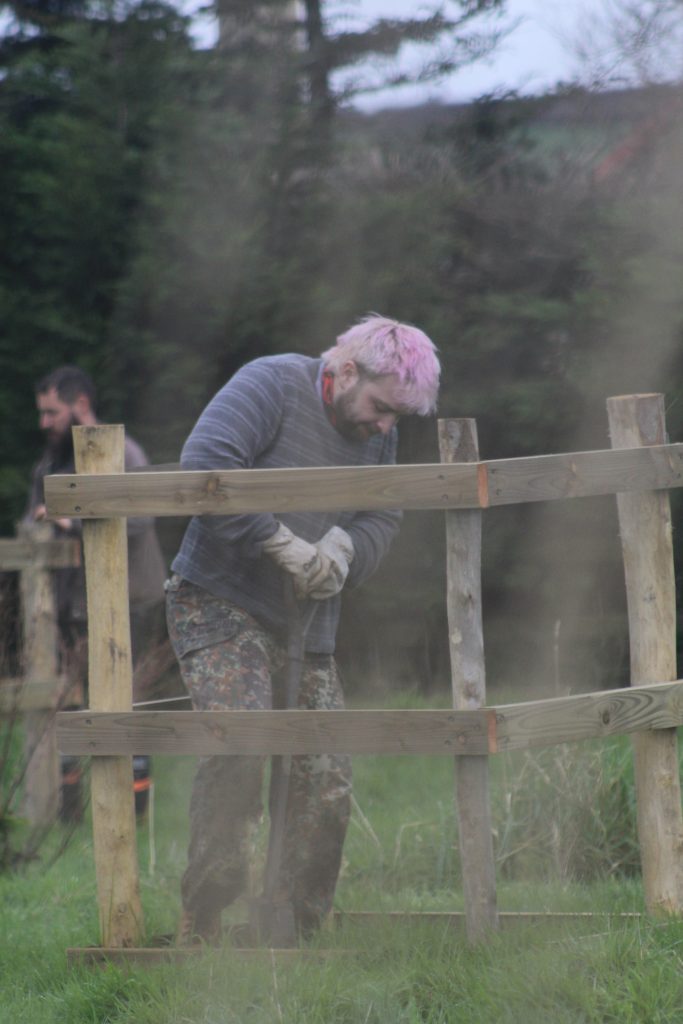
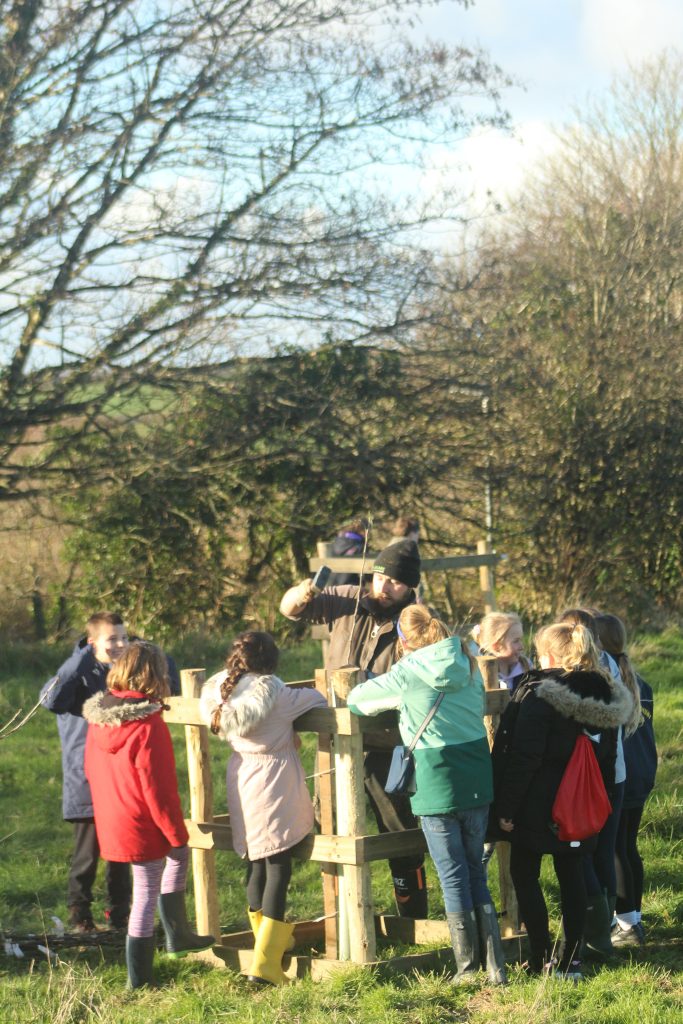
The orchard includes a wide range of Cornish Heritage varieties, including Ben’s Red, Cornish Queen, Manaccan Primrose, Hocking’s Green, Cornish Aromatic, Cornish Pine, Tregonna King and Cornish Gilliflower.
The hedgerow contains Hawthorn, Hazel, Elder, Blackthorn, Holly, Dog Rose, Guelder Rose, Dogwood, Field Maple and Oak.
The project aims to increase biodiversity on the site and produce apple crops which the charity will use at its annual Allantide events. Considered by many to be Cornwall’s answer to Halloween, Allantide is a traditional festival which has a strong focus on apples as symbols of good luck, divination and community.
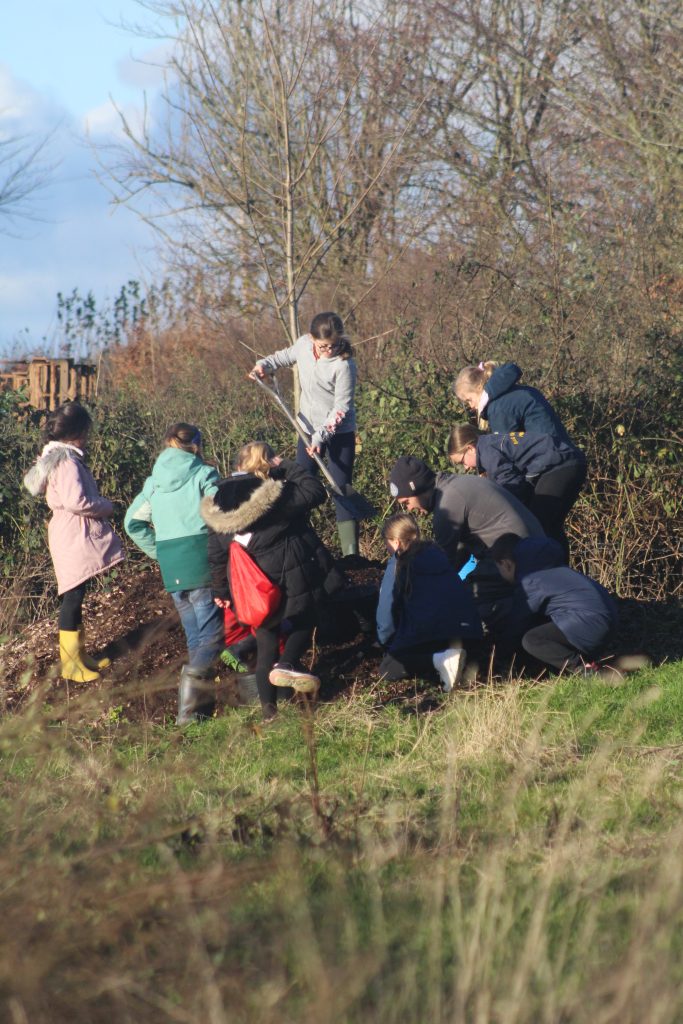
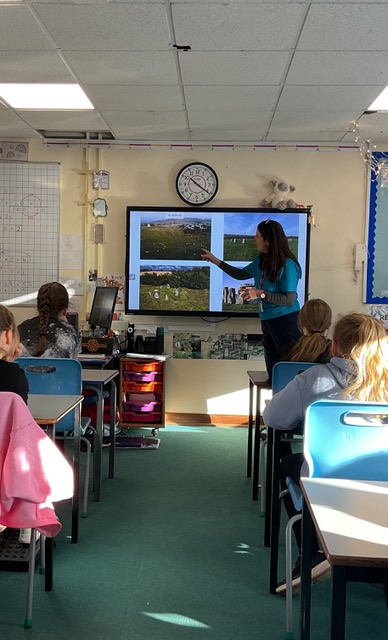
The planting involved Cornwall Heritage Trust’s Ranger team and volunteers, as well as children from Duloe Primary Academy, who took part in a special tree planting day with our Education and Outreach Manager, Caroline.
This included a classroom-based workshop in the morning, followed by a busy afternoon of tree planting.
Here is what the teachers said…
“The workshop was brilliant; it was informative and really captured the children’s attention.”
“The students really enjoyed the workshop in the morning. Their favourite part was the planting in the afternoon. As it is so local to us, they look forward to seeing the trees grow in the future.”
“It was a wonderful day of history, creativity, and hands-on conservation!”
Located at the southern end of the village of Duloe, between Liskeard and Looe, Duloe Stone Circle is Cornwall’s smallest known stone circle and the only Cornish monument of its kind to be constructed entirely from white quartz.
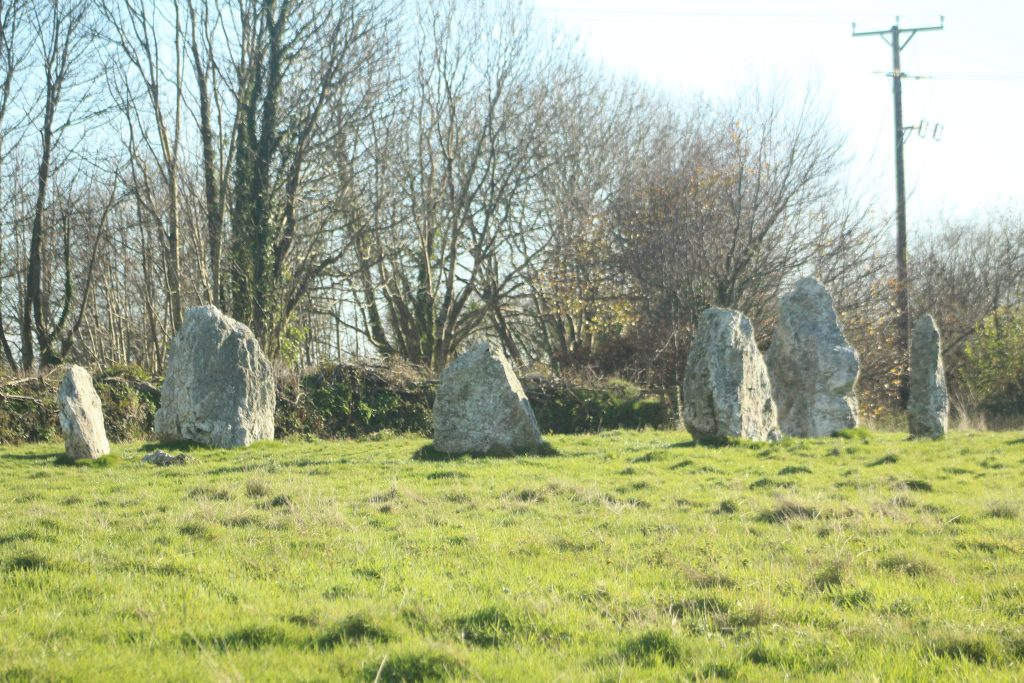
It is one of 18 historic sites which are cared for by the charity and is completely free for everyone to visit all year round.
Funded by
The latest session in our heritage skills training and education project saw participants learn how to sharpen and care for their countryside maintenance tools with Jeremy Weiss, a traditional rural services and training specialist.
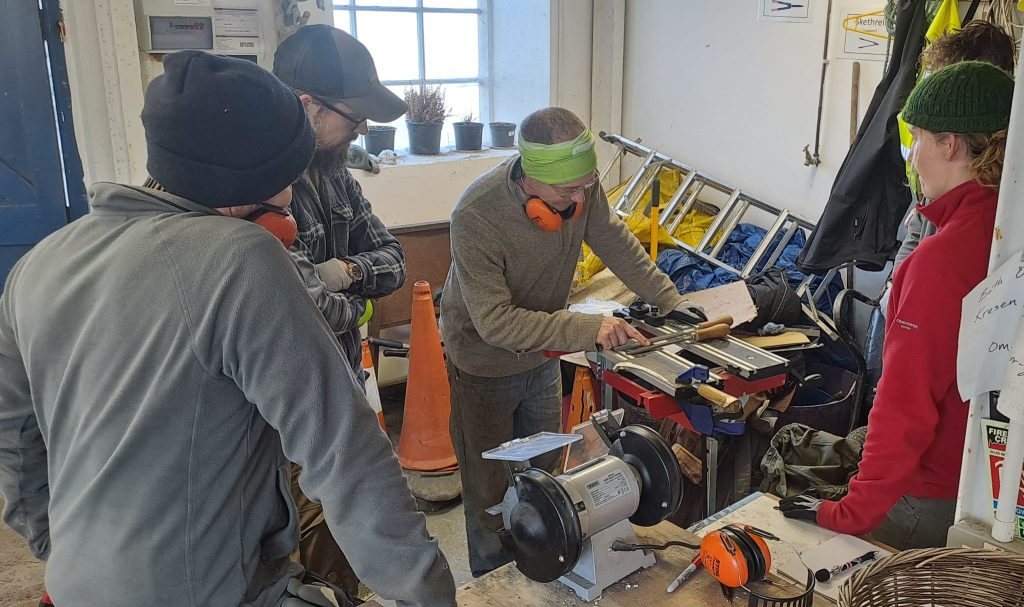
The workshop was open to the public, staff from other heritage organisations and our Ranger team. Thank you to everyone who joined us for this training day!
The workshop was part of a wide-ranging heritage skills training and education project, which has been made possible by a grant of £10,000 from Cornwall Community Foundation through the Tanner Phoenix Trust.
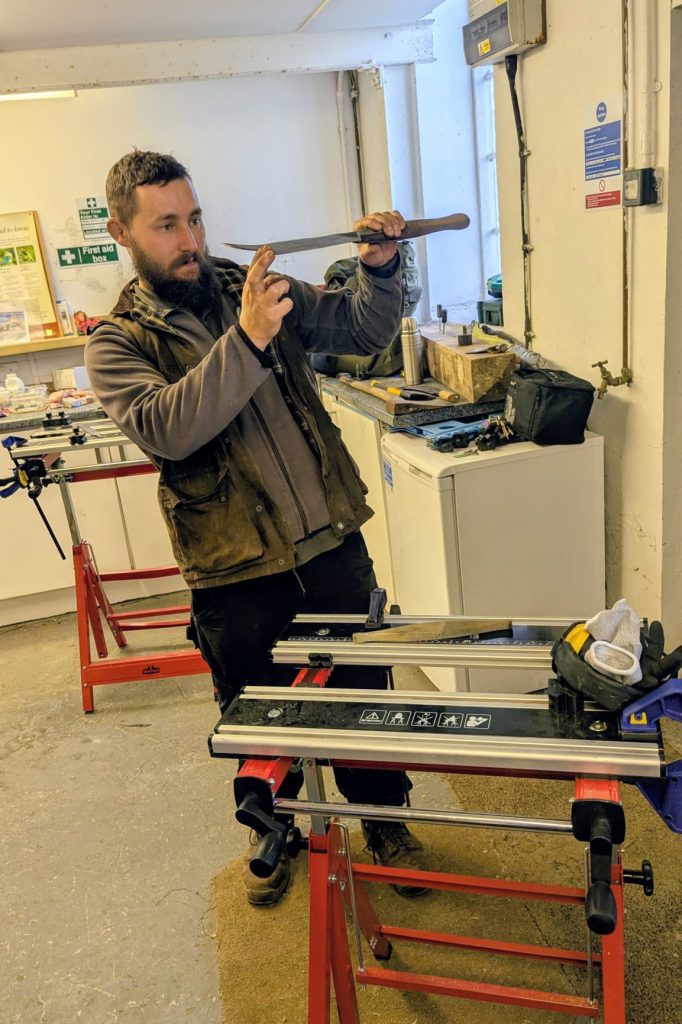
Jeremy is an experienced instructor having taught courses for the National Trust, Dartmoor Hill Farm Project, Devon Rural Skills Trust and for his own business, ‘Proper Edges’. He has a first-class honours degree in Environmental Science and a very keen interest in ecology, conservation and traditional countryside management.
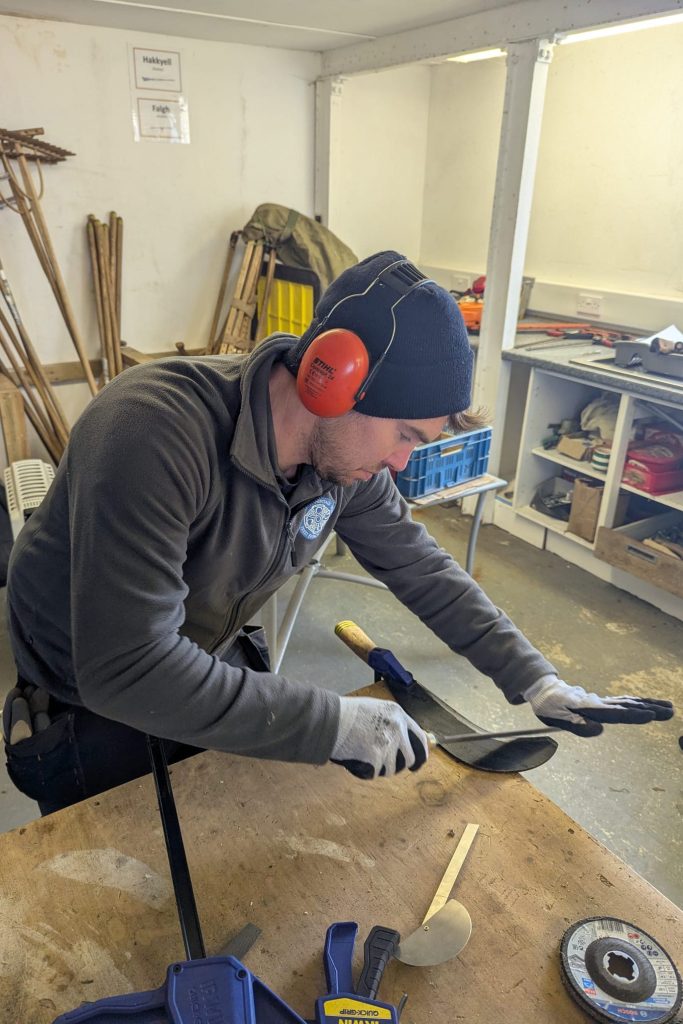
During this workshop, attendees learnt how to profile and shape the blades of bill hooks or axes so that they function at their best, cutting materials at the proper angle. A bill hook is a versatile cutting tool used widely in agriculture and forestry for cutting woody material such as shrubs and branches.
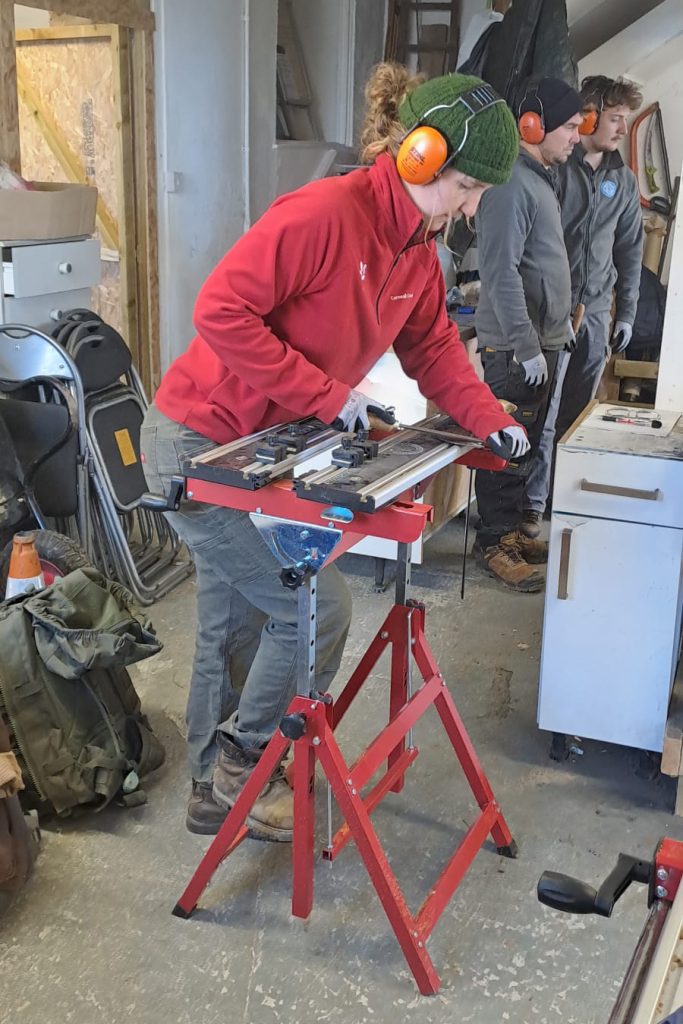
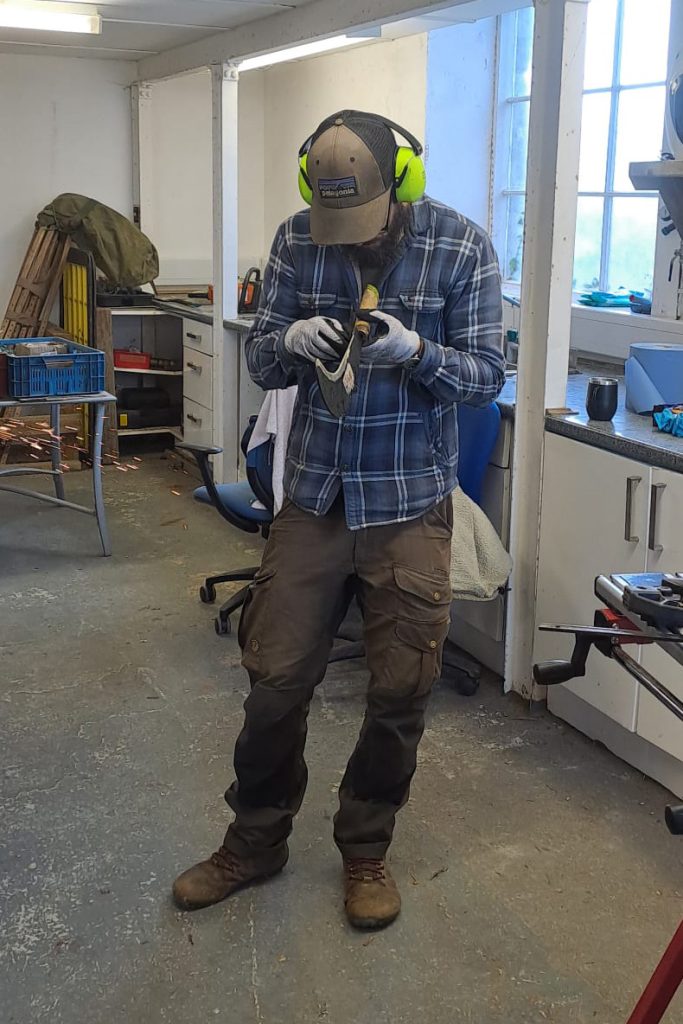
This skill means attendees can now also restore old bill hooks and prepare new bill hooks for use. They also learnt how to hone the edge to ensure that tools are suitably sharp and ready for correct usage.
Once their tools were ready, attendees made brash bundles, known as faggots, which provided the ideal situation to practise basic bill hook cutting and trimming techniques and become familiar with this tool.
About the funder
Cornwall Community Foundation helps people across Cornwall and the Isles of Scilly by awarding small grants to grassroots organisations that are working to overcome the challenges of disadvantage, exclusion and poverty in their communities.
Find out more at www.cornwallcommunityfoundation.com

We have two new benefits to thank our members for their support. They can receive 50% off entry at the National Maritime Museum Cornwall from 1st–31st January 2026 and 50% off entry at the National Lobster Hatchery from 14th February 2026!
If you are already members, we hope you enjoy visiting these fantastic places. If you would like to become a member, gift a membership or renew your membership, please click the buttons below.
National Maritime Museum Cornwall
50% off entry from 1st–31st January 2026

National Maritime Museum Cornwall offers visitors a rich opportunity to deepen their understanding of the sea and its connection to Cornwall’s heritage.
Situated on Discovery Quay beside Falmouth Harbour – the third-largest natural deep-water harbour in the world and Britain’s traditional gateway to the Atlantic – the museum occupies a custom-designed building on land once covered by boat builders’ sheds.

Through 15 galleries above and below the sea, the museum brings fresh perspectives to maritime issues, demonstrating their continued relevance to contemporary life whilst celebrating Cornwall’s unique coastal identity.
Whether exploring historic vessels from the UK and around the world, discovering Cornwall’s boatbuilding legacy, or engaging with family-friendly activities, visitors of all ages can find inspiring ways to connect with the maritime heritage that has shaped Cornwall’s distinctive character.
The discounted entry ticket for the National Maritime Museum Cornwall is valid for one day.


The National Lobster Hatchery
50% off entry from 14th February 2026

The National Lobster Hatchery is a marine conservation, research and education charity based in Padstow. A unique organisation, its work is specifically related to a commercial species, the European Lobster, and in the last few decades, it has successfully established itself as a centre of expertise on a global scale.
There’s much to explore at its award-winning visitor centre, where you get up close with rarely seen lobster babies, pregnant lobster mamas, giant lobsters and other weird and wonderful coastal creatures.

A visit to this family-friendly attraction is a unique opportunity to catch a glimpse of what’s happening at the forefront of marine conservation, and learn about how the hatchery works with the local fishing community.
The visitor centre is currently closed for maintenance and will reopen on Saturday 14th February 2026.


www.nationallobsterhatchery.co.uk
Our members are the reason we can continue our charitable work and that’s why providing benefits like this is so important to us.
In addition to this new benefit, just a quick reminder that Cornwall Heritage Trust members receive discounted or free entry to several heritage sites and museums as a thank you for their support.

These include…
Free Entry
The sites in Cornwall owned and managed by English Heritage
Free entry, plus 75% discount on special event charges

Tintagel Castle
A magical day out with its wonderful location, set high on the rugged North Cornwall coast. It offers dramatic views, fascinating ruins and a stunning beach café.
Pendennis Castle
One of the finest fortresses built by Henry VIII. It has seen action in many conflicts and was one of the last royalist strongholds to fall during the English Civil War.
Chysauster Ancient Village
This Romano-British settlement was originally occupied almost 2,000 years ago and is one of the finest examples of such in the country.
Launceston Castle
Climb to the top of this Norman castle and you’ll be rewarded with the most remarkable views. Launceston was the former capital of Cornwall and the castle, commanding the town and surrounding countryside.
Restormel Castle
Standing in ruins amid beautiful countryside, Restormel is one of the most remarkable castles in Britain. The present circular structure, built in the late 13th century, was a luxurious retreat for its medieval owners.
St Mawes Castle
Beautifully positioned overlooking the estuary, St Mawes Castle is among the best-preserved of Henry VIII’s seaside fortresses – and the most elaborately decorated of them all.

Photo credit – Tim Pearson

Discounted Entry
PK Porthcurno
50% off entry

The UK’s only dedicated museum of global communications, PK Porthcurno explores how a once uninhabited valley in Cornwall became the heart of worldwide communications, how it remains so today, and what might happen tomorrow.
From the invention of electricity and Morse code to fibre optics and future technology, this award-winning museum combines the wonder of science with amazing histories and tales of human endeavour from around the globe, right where the story of communications began.


Geevor Tin Mine
50% off entry

Photo Credit – Geevor Tin Mine
Geevor Tin Mine was the last mine to work the famous St Just Mining District, the site of the largest number of undersea tin and copper mines in the world. Today, it is a family-friendly multi-award winning heritage attraction and museum and a must-visit location within the Cornish Mining World Heritage Sites.
Cornwall Heritage Trust membership is not eligible for use by school groups at Geevor Tin Mine. Our One Adult Family and Life memberships permit 1 adult and up to 3 children 50% off entry and our Two Adult Family and Joint Life memberships permit 2 adults and up to 6 children 50% off entry. A physical Cornwall Heritage Trust membership card is required to receive discounted entry.

Wheal Martyn Clay Works
50% off entry

Photo Credit – Wheal Martyn Clay Works
China clay mining has shaped the landscape, lives of people and economy of mid-Cornwall for over 250 years. It is Cornwall’s largest mining industry.
The UK’s only china clay mining museum, Wheal Martyn Clay Works tells the story of this fascinating industry and the people who worked and lived in the shadows of Cornwall’s iconic ‘white pyramids’.

King Edward Mine Museum
50% off Adult Admission

Photo Credit – King Edward Mine Museum
King Edward Mine is the oldest complete mine site in Cornwall and one of only two Cornish tin mines left in the world. Unlike all the other tin mines in the surrounding landscape, it has been unaltered for over 100 years because it was used for teaching practical mining from 1897 until 2005.
The museum has won several awards and there’s lots to explore there including an indoor exhibition, restored machinery and working engines.

Now that the Castilly Henge excavation has drawn to a close, we wanted to take the opportunity to reflect on this landmark project – especially the impact of the outreach programme which our team ran as part of it.

‘Castilly Henge Excavation’ Mike Davey (2025), supported by The National Lottery Heritage Fund, CC BY 4.0.
It was extremely unique and unusual to have the opportunity to run such a wide-reaching outreach programme for an excavation like this. The aim was to enable as many members of the local community as possible to learn about the heritage on their doorstep and see behind the scenes of a dig.
A significant number of volunteers were directly involved working alongside professional archaeologists, and our team also ran a huge range of outreach activities, tours and educational workshops for local schools, community groups and other organisations.
As a result of the project…
Nearly 1500 people actively engaged with the dig through school trips, community group visits, talks, volunteering and the public open day.
That included…
Nearly 1000 people who came to a story cafe, talk or open day about Castilly Henge.

‘Castilly Henge Excavation’ Mike Davey (2025), supported by The National Lottery Heritage Fund, CC BY 4.0.

‘Castilly Henge Excavation’ Mike Davey (2025), supported by The National Lottery Heritage Fund, CC BY 4.0.

‘Castilly Henge Excavation’ Mike Davey (2025), supported by The National Lottery Heritage Fund, CC BY 4.0.
Over 140 people who took part in a community group visit or NHS Social Prescribing session as part of the excavation.
Here is what some of their group leaders said…
“Participants found the historical content fascinating and really enjoyed visiting an active excavation site.”
“We especially loved the practical elements of the session, from sieving soil to using Polaroid cameras.”
“You are both fantastic facilitators, and we always enjoy our time at your groups.”

‘Castilly Henge Excavation’ Mike Davey (2025), supported by The National Lottery Heritage Fund, CC BY 4.0.

‘Castilly Henge Excavation’ Mike Davey (2025), supported by The National Lottery Heritage Fund, CC BY 4.0.
More than 80 volunteers and two training internship placements who gave over 2000 hours of their time, working alongside professional archaeologists to directly support the excavation.
-
- 50% of volunteers working on the site were not aware of Castilly Henge before the excavation.
- For 66% of volunteers, it was their first experience of an archaeological dig.
- 100% of volunteers said they learnt something new from the experience.

‘Castilly Henge Excavation’ Cornwall Heritage Trust (2025), supported by The National Lottery Heritage Fund, CC BY 4.0.

‘Castilly Henge Excavation’ Cornwall Heritage Trust (2025), supported by The National Lottery Heritage Fund, CC BY 4.0.
Here is what some of them said…
“I loved every minute of my volunteering and you provided a great insight into your work. The combined agencies and charities working together seemed seamless to an outsider – I’m sure it was very difficult to organise!”
“I enjoyed helping on a variety of tasks and it was interesting to witness the archaeological excavations taking place.”
“I am looking forward to finding out what significance Castilly Henge held in its time. Overall, the experience has been fantastic.”
This is what one of the people undertaking a training internship said…
“Thank you so much for the opportunity to be part of the Castilly Henge team of volunteers. The placement has been incredible and I am coming away from the experience with so much pride.”
The training internships were open to those not currently in education, employment or training.

‘Castilly Henge Excavation’ Mike Davey (2025), supported by The National Lottery Heritage Fund, CC BY 4.0.

‘Castilly Henge Excavation’ Cornwall Heritage Trust (2025), supported by The National Lottery Heritage Fund, CC BY 4.0.
Over 340 children from local primaries, secondaries and home education groups who took part in an outreach workshop at the site.

‘Castilly Henge Excavation’ Cornwall Heritage Trust (2025), supported by The National Lottery Heritage Fund, CC BY 4.0.

‘Castilly Henge Excavation’ Mike Davey (2025), supported by The National Lottery Heritage Fund, CC BY 4.0.
This is what some of the school children said…
“I loved seeing the dig and learning about history from what they find.”
“It was a once-in-a-lifetime experience to witness history being dug up right in front of our eyes!”
“It was like nothing I expected, there was a lot more carefully brushing the dirt away and not that much digging full pelt into the ground.”

‘Castilly Henge Excavation’ Cornwall Heritage Trust (2025), supported by The National Lottery Heritage Fund, CC BY 4.0.
This is what their teachers said…
“The archaeology workshop was brilliant for encouraging students to ask historical questions, use their knowledge and understanding to justify their answers and to generally promote enjoyment in history.”
“Caroline’s knowledge and enthusiasm were exceptional — she explained complex ideas clearly, answered questions with real expertise, and brought the history of the site to life in a way that captivated both students and staff.”
“I’ve not been aware of Castilly Henge and it only came to our attention, and the attention of local families, thanks to this project. We’d like to thank Cornwall Heritage Trust not only for running the wonderful workshops but for also helping with our transport costs. Without this help, the children would have missed out on a valuable learning opportunity and the realisation that they live so close to these ancient monuments.”

‘Castilly Henge Excavation’ Mike Davey (2025), supported by The National Lottery Heritage Fund, CC BY 4.0.
As part of this, five schools took part in a collaborative workshop with artist Robin Sullivan to create cyanotype-covered wicker sculptures inspired by the monument.

‘Castilly Henge Excavation’ Mike Davey (2025), supported by The National Lottery Heritage Fund, CC BY 4.0.
This is what some of the school children said…
“I enjoyed making the blueprint art.”
“I loved the blue prints art as I’d never done anything like that before.”
Here’s what their teachers said…
“The children really enjoyed the activities and getting involved in various arts and crafts.”

‘Castilly Henge Excavation’ Mike Davey (2025), supported by The National Lottery Heritage Fund, CC BY 4.0.

‘Castilly Henge Excavation’ Mike Davey (2025), supported by The National Lottery Heritage Fund, CC BY 4.0.

‘Castilly Henge Excavation’ Mike Davey (2025), supported by The National Lottery Heritage Fund, CC BY 4.0.
It was so special to be involved in the project and we’re hugely grateful to everyone who helped make it possible.
The project was a collaboration between Historic England, Cornwall Archaeological Society and Cornwall Heritage Trust.

The excavation was funded and directed by Historic England and supported by staff from Cornwall Archaeological Unit. Volunteering and outreach were made possible through a £42,990 grant to Cornwall Archaeological Society from The National Lottery Heritage Fund and a £10,000 grant from Historic England.

Support our Castilly Henge Appeal
Cornwall Heritage Trust is currently trying to raise the £50,000 needed to acquire and secure the future Castilly Henge so that it can be protected for future generations and freely accessible to the public all year round.
This is a rare opportunity to ensure Castilly Henge is protected and that everyone can enjoy it once and for all. Every donation makes a huge difference.

Please cite this resource as: ‘Castilly Henge Excavation’ Cornwall Heritage Trust (2025), supported by The National Lottery Heritage Fund, CC BY 4.0.