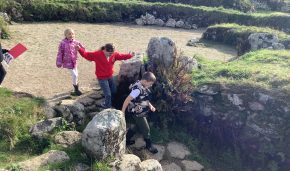
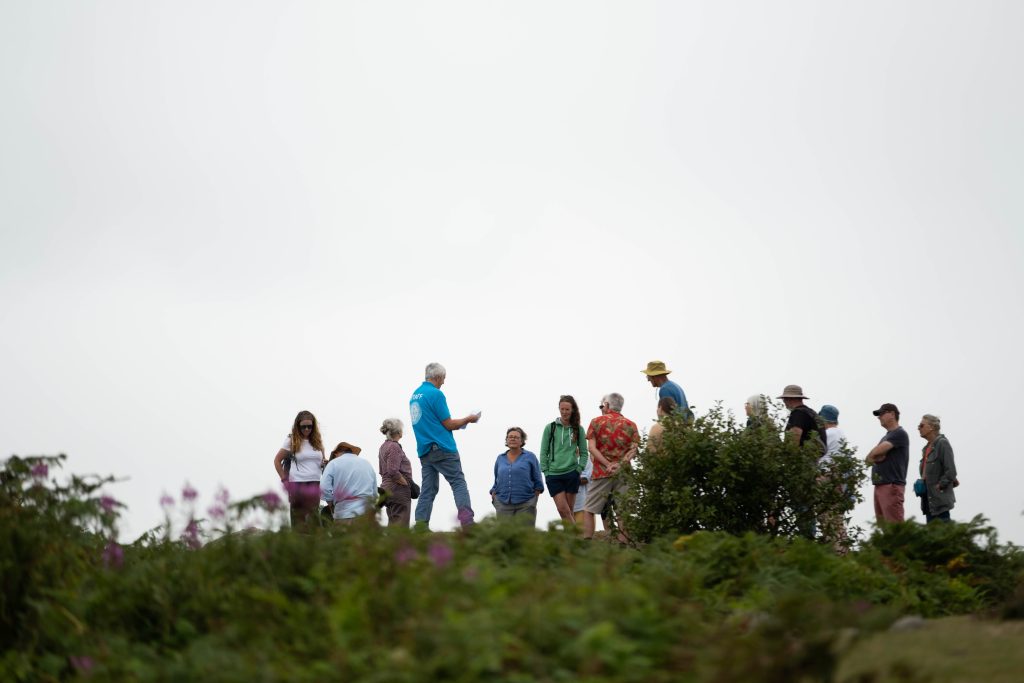
Our series of pop-up wellbeing days for care experienced young people got off to a flying start last week, with our first group of 11-16-year-olds heading out to explore Caer Bran and Carn Euny with our Education and Outreach Manager, Caroline Davey.
We are hosting these sessions as part of an ongoing partnership with Carefree Cornwall.

Carefree is a Cornish charity for young people with care experience aged 11-25. It aims to help care experienced young people have a good life through positive relationships, support with transitions and helping young people improve the care system for themselves and others.
This is what the young people said about their day…
“I’ve made new friends.”
“We had freedom and with freedom we can create our own rules.”

This is what the team from Carefree said…
“The young people had a joyful and enriching day.”
These days are part of our ‘Lowena’ wellbeing project, which is funded by the National Lottery Community Fund.

This initiative provides young people in Cornwall with opportunities to experience the calming and restorative benefits of nature within Cornwall’s unique historic landscapes.
We know what a huge impact engaging with our shared heritage can have on mental health, wellbeing and social connection, and that’s why we believe offering these experiences to young people through partnerships like this is so important.
Funded by…

Experimental land management was top of the agenda for our Youth Rangers this week as they spent the day supporting our team at Tregonning Hill near Helston.
Our award-winning Young Rangers ‘Climate Action Youth Group’ offers the chance to take action over the climate crisis, assist with environmental work on historic natural landscapes and develop skills in countryside management.

Due to the complex needs and varied terrain of the historic sites we care for, our Rangers are firm believers in exploring a wide variety of techniques to improve biodiversity, protect archaeological features and ensure that these special places are accessible to the public.
This week’s session saw the group trialling different methods of bracken management in this diverse archaeological landscape, which has monuments dating back to the Bronze Age.

Ancient monuments can be seriously damaged by bracken roots, whilst the monoculture the vegetation creates severely limits biodiversity. Its management has huge archaeological and ecological benefits, helping to protect these special places and encouraging the regeneration of heathland – a habitat which supports a much wider range of plants and animals than the bracken does and helps rare species thrive.
One of these methods was scything – a traditional skill which our Young Rangers have previously had the opportunity to undertake professional training in. This aims to support their work with our charity and give them an accreditation to take forward to help achieve their career or life goals.

This project is currently part-funded by the National Lottery Community Fund and holidaycottages.co.uk.


Cornwall Heritage Trust members enjoyed a walk into Medieval Cornwall this month with an exclusive guided tour of Restormel Castle with Dr Jeremy Ashbee, Head Curator of Properties at English Heritage, followed by a guided walk through the beautiful River Fowey Valley with Geraint Richards MVO FICFor, High Sheriff of Cornwall and Head Forester at The Duchy of Cornwall.
The huge and almost perfectly circular keep of Restormel Castle stands on a high and deeply ditched mound overlooking the river Fowey. Restormel was begun in the late 13th century but reached its greatest splendour under Edward the Black Prince.
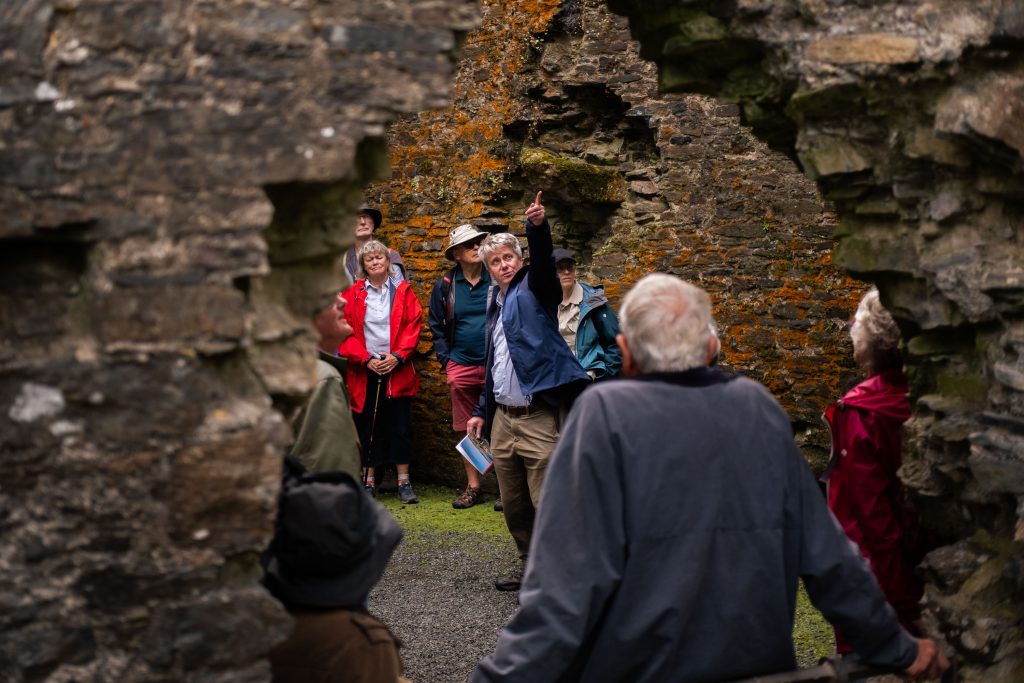
The walk offered visitors a fascinating insight into the castle’s history and its links with the Duchy of Cornwall. The day was rounded off with tea, coffee and cake at the Duchy of Cornwall Nursery, courtesy of the High Sheriff.
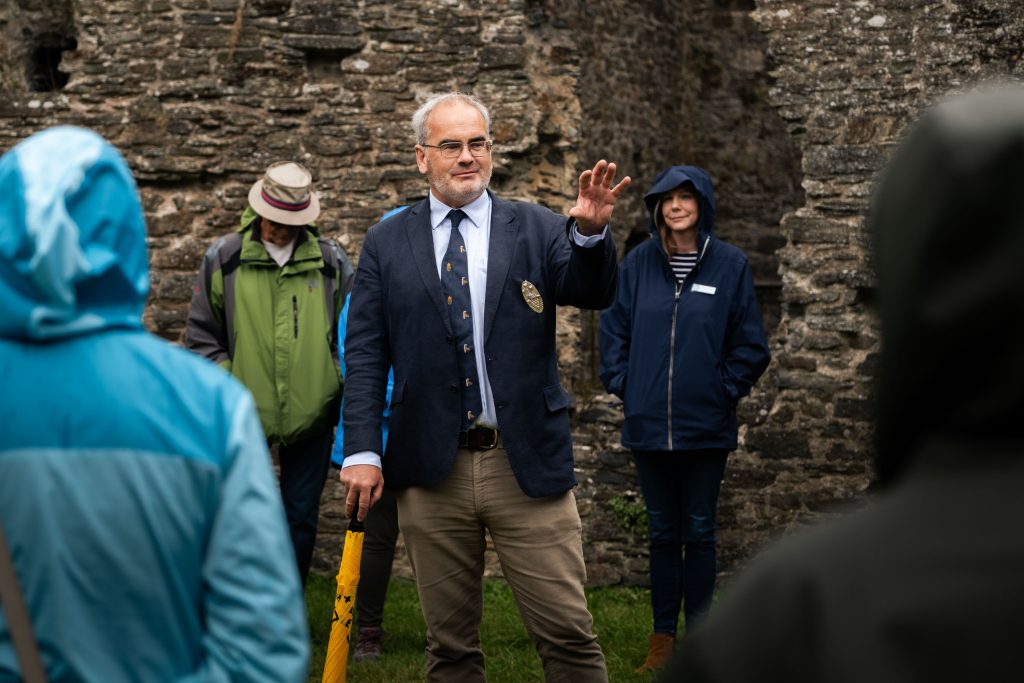
Thank you to everyone who came along. We hope you enjoyed exploring and learning about this incredible place!
This walk was made possible thanks to English Heritage and the Duchy of Cornwall, and we’re hugely grateful for their support.
Generously supported by…


Our members receive a range of benefits and exclusive access to events like this as a thank you for their support.
These include…
- Free entry to the Cornish sites owned and managed by English Heritage, including Tintagel Castle, Restormel Castle, St Mawes Castle, Pendennis Castle, Launceston Castle and Chysauster Ancient Village
- 50% off entry to PK Porthcurno, Geevor Tin Mine, Wheal Martyn Clay Works and The Vale of Avalon
- 50% off on Adult Admission to King Edward Mine
- Discounted entry to our Awenek! Heritage Festival taking place on Saturday 13th September at Enys Gardens, Penryn
- Early access booking to special events
- Member-only events throughout the year and an invitation to our AGM, held exclusively at the Cornwall Museum and Art Gallery
- Regular updates, newsletters and our bi-annual member magazine
This autumn will see an exciting four-week archaeological excavation taking place near Bodmin, which hopes to uncover a possible hidden stone circle at a unique prehistoric ritual site called Castilly Henge.

‘Castilly Henge Excavation’ Mike Davey (2025), supported by The National Lottery Heritage Fund, CC BY 4.0.
Not all henges contain stone circles, and there is only one other known to survive in Cornwall.
The project is a collaboration between the Cornwall Archaeological Society, the Cornwall Heritage Trust and Historic England.
To give people the chance to learn more about this fascinating monument and the important questions the dig will target about its character, date and potential later reuse, this month the project hosted the first in a series of free community talks with Dr Olaf Bayer, Senior Archaeological Investigator at Historic England.

‘Castilly Henge Excavation’ Mike Davey (2025), supported by The National Lottery Heritage Fund, CC BY 4.0.
Over 100 people joined us for the talk, which took place at Roche Victory Hall. Thank you to everyone who came along – we hope you enjoyed learning about Castilly Henge!

‘Castilly Henge Excavation’ Mike Davey (2025), supported by The National Lottery Heritage Fund, CC BY 4.0.
The excavation is being funded by Historic England. Outreach for the project, which includes this free talk, has been made possible by a £42,990 grant from the National Lottery Heritage Fund and a £10,000 grant from Historic England.
This project is a collaboration between…

Made possible by funding from…

We will be hosting the second talk in this series via Zoom on Thursday 4th September 2025 from 6pm – 7pm.
The talk will be repeated at one additional venue local to the excavation site during the next few months. Full details to follow.
Cornwall Heritage Trust has recently launched a fundraising appeal to rescue and secure the future of Castilly Henge.
We are hoping to raise £50,000 towards the acquisition of the monument and have so far raised over £10,000 thanks to the generous support of nearly 100 donors. We cannot thank them enough.
We still have some way to go to reach our target, so if you can donate, we would be hugely grateful. Every penny makes a huge difference and is vital in helping us to rescue Castilly Henge, secure its future through active management and enable the public to visit it for free all year round.

Please cite this resource as: ‘Castilly Henge Excavation’ Cornwall Heritage Trust (2025), supported by The National Lottery Heritage Fund, CC BY 4.0.
A historic site in Newquay, thought to have been inhabited since prehistoric times, has been protected for future generations by our small, independent charity.
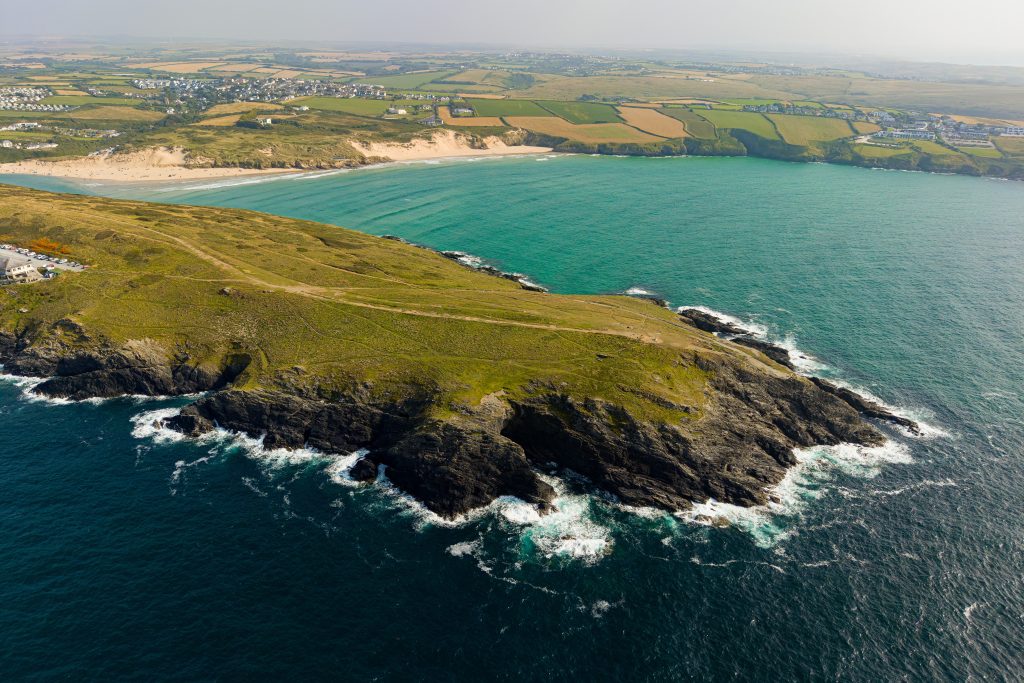
Cornwall Heritage Trust has taken ownership of East Pentire Headland – a historic clifftop site situated on the southern edge of Newquay between the famous surfing beaches of Fistral and Crantock. The site has evidence of human activity dating back over 8000 years and contains a number of archaeological remains, including Bronze Age barrows.
The site has been transferred to the charity from Cornwall Council.
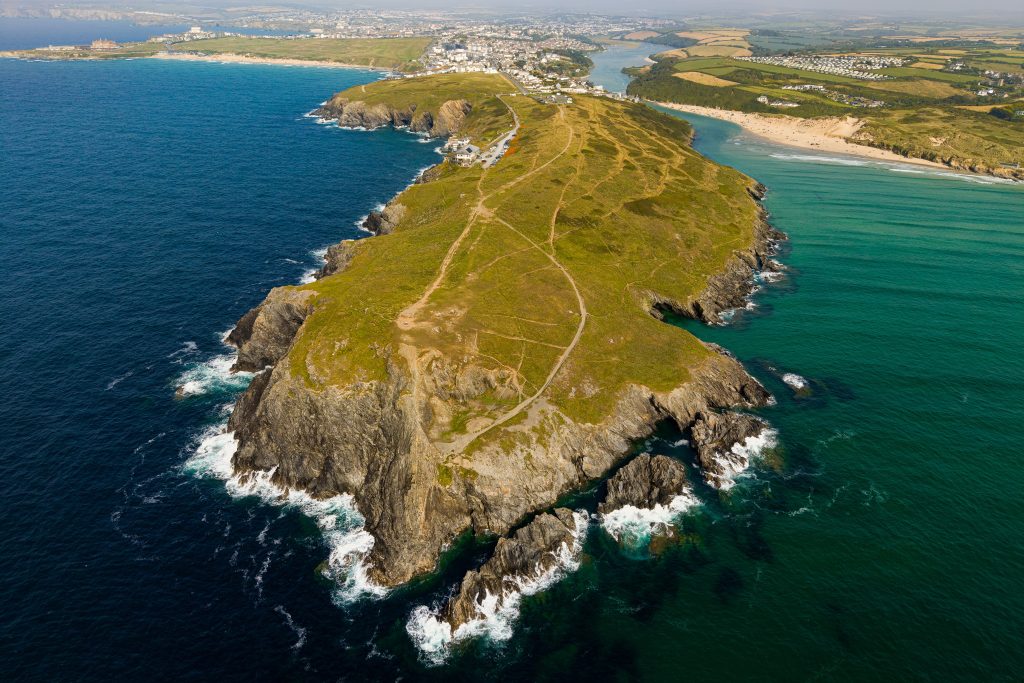
The headland is a popular spot for marine wildlife watching, with whales, seals and dolphins often visiting the nearby shoreline, and is designated a “County Wildlife Site” renowned for its wide variety of mosses and bird life.
It is home to a large number of skylarks, which are a Red List species of conservation concern due to significant population decline. Kestrels, stonechat, ravens and peregrine falcons are also routinely observed on the site.
Cathy Woolcock, Cornwall Heritage Trust CEO said: “East Pentire Headland is an incredibly special place. It has huge archaeological and ecological significance, as well as being an important space for the local community to come together, so it’s such an honour for our charity to now be its custodian and ensure everyone can continue to enjoy it.”
Founded in 1985, Cornwall Heritage Trust is a small, independent charity which protects historic places across Cornwall, hosts a wide-reaching programme of wellbeing, education and community workshops, activities and events at these heritage sites and provides grants enabling visits to museums and historic monuments across Cornwall.
The headland adjoins a car park, which will now support this charitable work. The car park will be managed by the external parking management company, NPC.
If you have any questions relating to the car park at this site, please head to https://www.nationalparkingcontrol.co.uk
Three further transfers of historic sites to the charity from Cornwall Council are planned to take place over the next 12 months. They are Minions Heritage Centre, the Prince of Wales Engine House and Castle an Dinas (Penwith).
Cornwall Heritage Trust has received a revenue grant of £50,000 from the Garfield Weston Foundation.
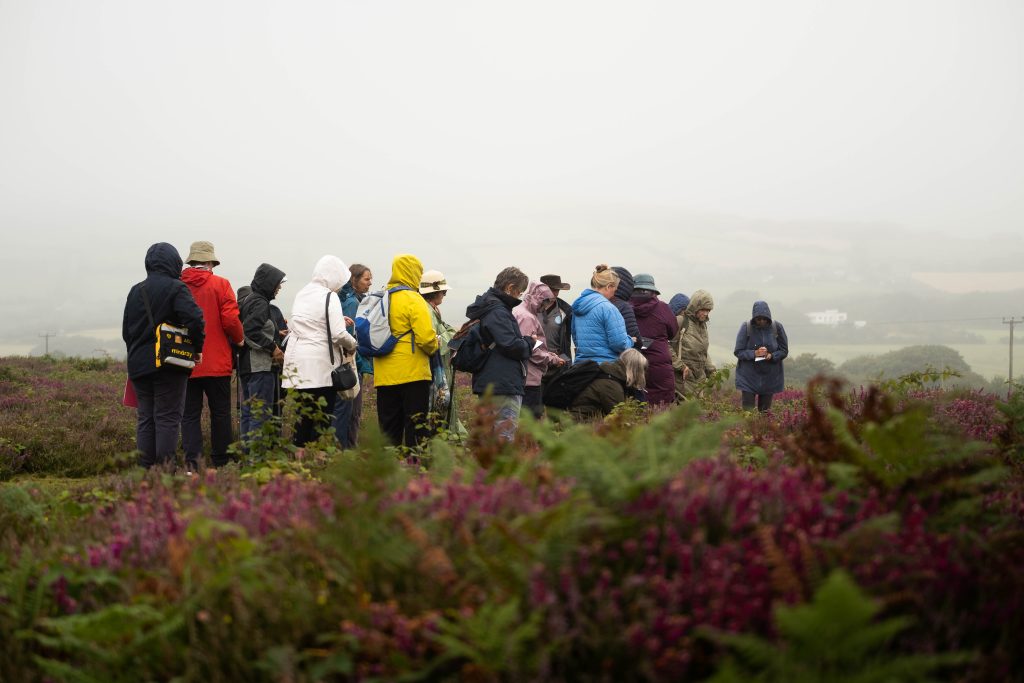
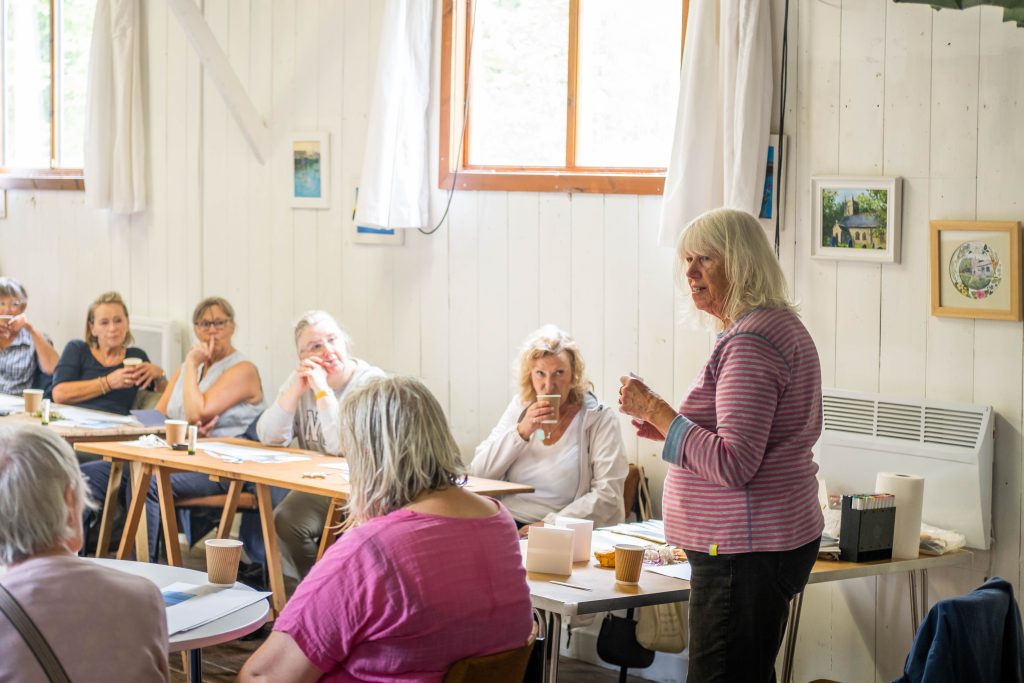
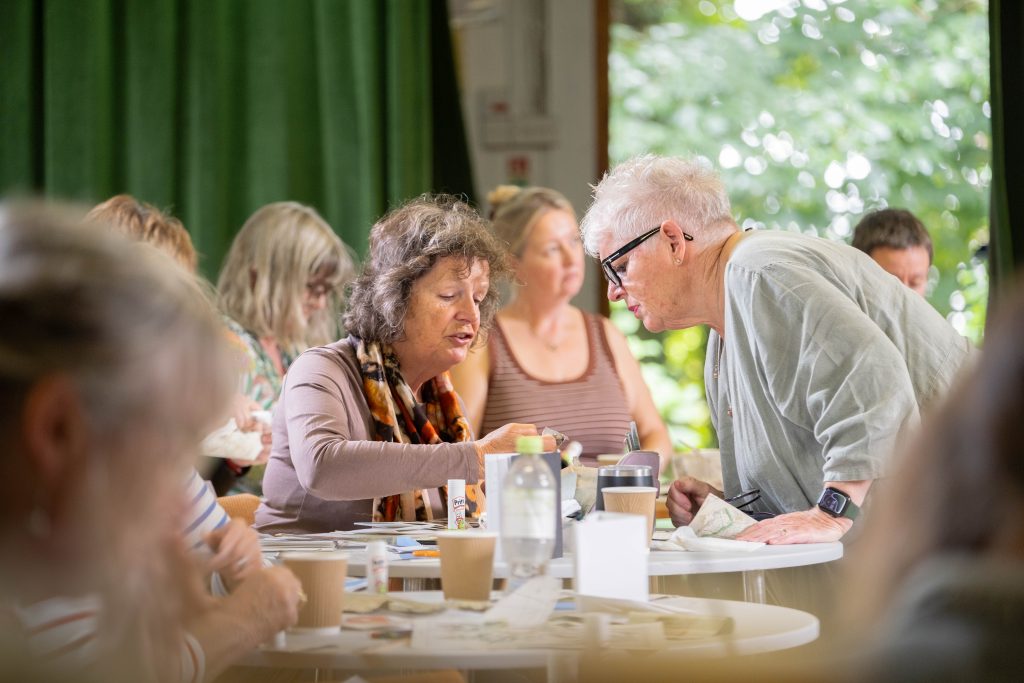
Keen artists and creative minds had the chance to explore the stunning historic landscape at Sancreed Beacon and create a beautiful folded concertina book to take home with our current Artist in Residence, Sue Lewington at a special guided walk and workshop last week.
Sue is an artist and illustrator, mostly based around the West Penwith Peninsula and on the Isles of Scilly. Her inspiration comes from the energy of the landscape, the seas and the skies and the frayed edges of the coastline.
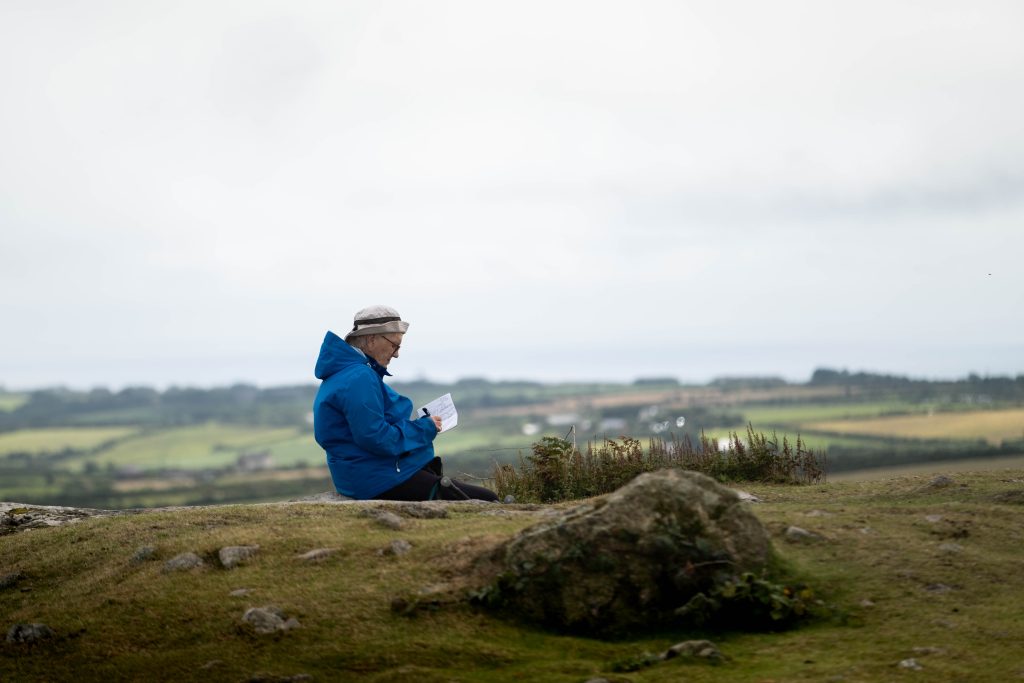
The workshop involved an hour-long guided walk around Sancreed Beacon led by Cornwall Heritage Trust’s Countryside Ranger, Hollie Ferris. The site is a beautiful stretch of semi-natural moorland which has been used by people since at least the Bronze Age.
People have been drawn to this site’s spectacular views and natural resources for thousands of years. The hill contains a number of archaeological remains and it is a haven for wildlife. Sue was on hand throughout the walk to discuss the creative inspiration this special place can offer.
Attendees then headed to Sancreed Village Hall for a two-hour art workshop creating a folded concertina artist’s book in which they recreated the feel and sights of their walk through sketching, painting and writing.
Thank you to everyone who joined us. We hope you had an inspiring afternoon!
Flint knapping workshops, special guided walks and the chance to explore a Bronze Age Living History Encampment were all on offer last week as Cornwall Heritage Trust celebrated the Festival of Archaeology.
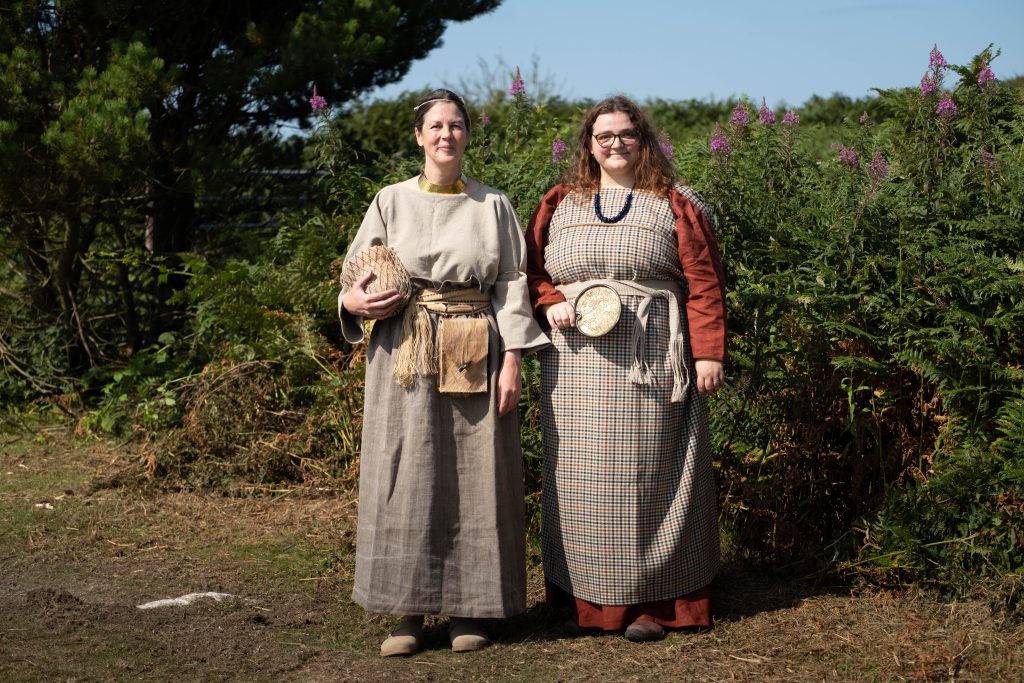
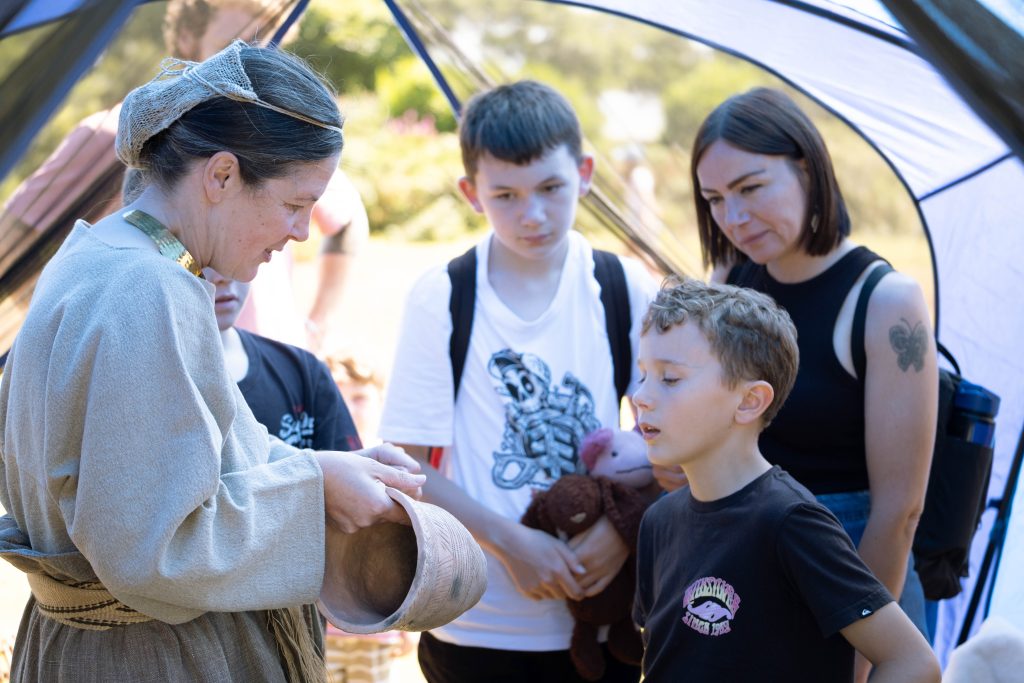
Taking place at Sancreed Beacon, this fun-filled day aimed to bring the site’s prehistoric past to life for all ages with activities including ancient weaving, building a wattle and daub fence, designing your own Bronze Age pot and handling objects from Cornwall’s past.
Our Education and Engagement team welcomed over 200 visitors, who were all keen to get stuck in and get a taste of life thousands of years ago.
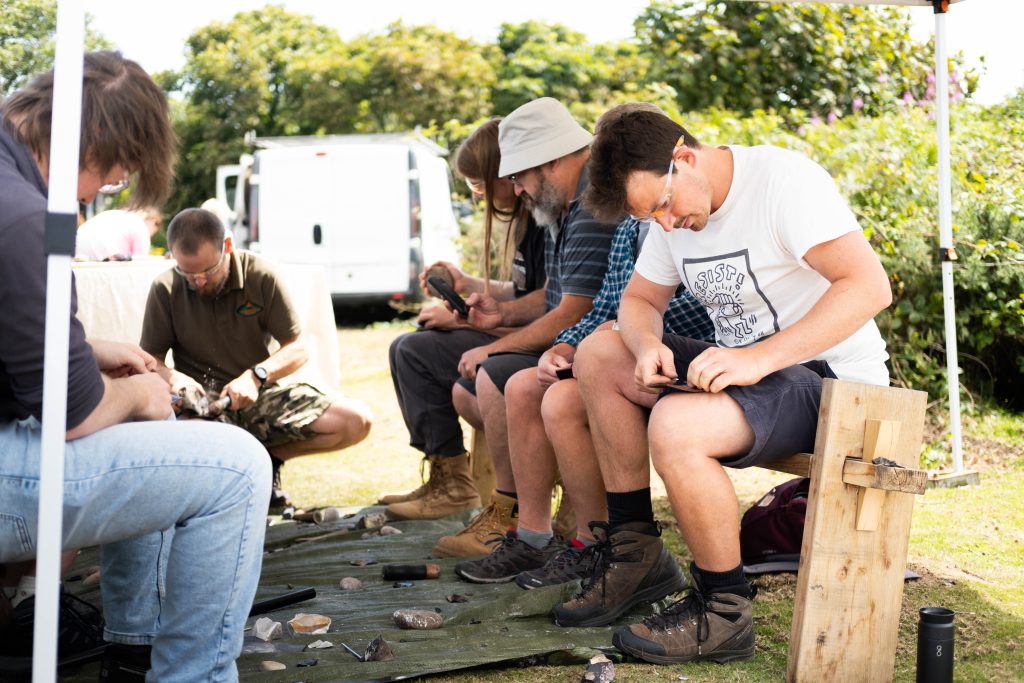
There was also the chance for some to take part in an immersive half-day workshop to learn flint knapping – a technique used by our ancestors to shape stone into tools and artefacts. This masterclass was delivered by Devon and Cornwall Bushcraft CIC and was part-funded by the National Lottery Heritage Fund.

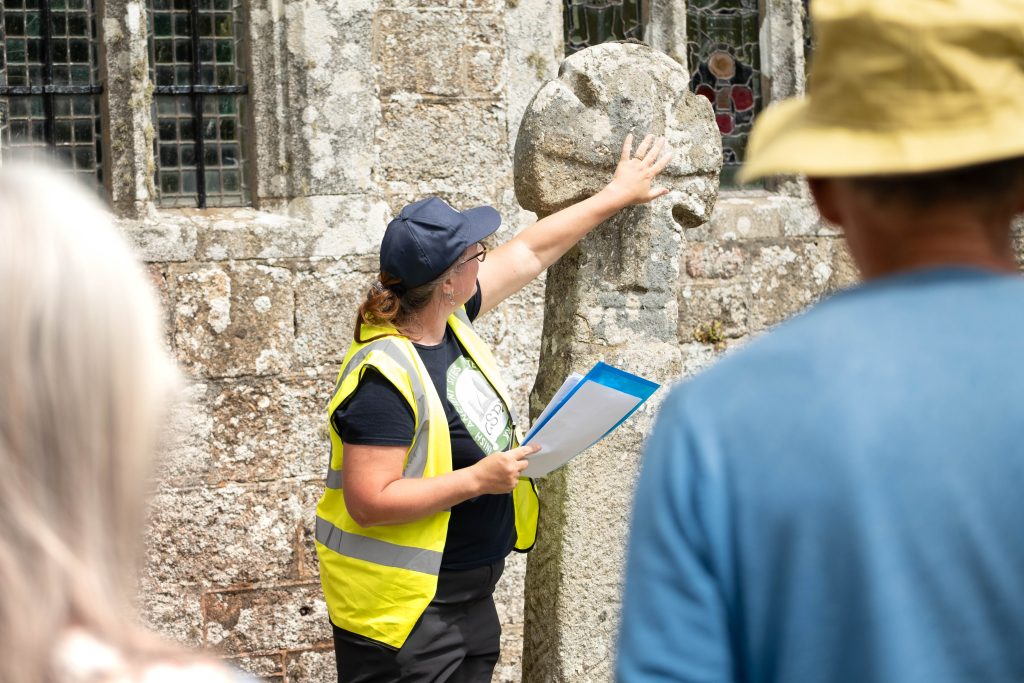
Special free guided walks around the site and local area were also on offer for Cornwall Heritage Trust, Cornwall Archaeological Society and Cornish Ancient Sites Protection Network members. These were led by trained archaeologist and Cornwall Heritage Trust Sites Officer, Dick Cole, and writer, researcher, astronomer and Cornwall Heritage Trust Project Manager – Sites, Carolyn Kennett.
Thank you to everyone who came along. We hope you enjoyed your journey back in time!
This event was part of the Council for British Archaeology’s annual Festival of Archaeology.
This event was part-funded by…

Traditional hay making was the call of the day for our Young Rangers this week as they headed to Skyegrove – a small-scale farm near Liskeard which promotes the use of hand-powered tools and a bio-diverse, regenerative approach to farming.

Our award-winning Young Rangers ‘Climate Action Youth Group’ offers the chance to take action over the climate crisis, assist with environmental work on historic natural landscapes and develop skills in countryside management.
Due to the complex needs and varied terrain of the historic sites we care for, our Rangers use a wide variety of techniques to undertake their work to improve biodiversity, protect archaeological features and ensure that these special places are accessible to the public.


They are firm believers in the ecological and archaeological benefits of complementing modern land management techniques with traditional methods, and the day was a fantastic opportunity for our Young Rangers to learn a new skill that they can use in their work with our charity and take forward to help achieve their career or life goals.

The next session is set to take place from 11am – 3pm on Wednesday, 20th August at Tregonning Hill near Helston. This diverse historic landscape is one of the 17 heritage sites cared for by Cornwall Heritage Trust, and the session will involve bracken management to improve biodiversity, protect archaeological features and ensure the site is accessible to the public.
This project is currently part-funded by the National Lottery Community Fund and holidaycottages.co.uk.
This project is part-funded by…
Cornwall has a long and proud history of lighting beacons at times of celebration, so it seemed very fitting for our small, independent charity to mark our 40th anniversary by carrying on this time-honoured tradition.
To celebrate this milestone birthday, we lit a specially commissioned mini-brazier at each of the historic sites in our care this Spring and Summer. The beacon lighting tour involved several large public events alongside some smaller, private ceremonies hosted in conjunction with some of our partner heritage organisations.
The brazier was designed and constructed by Cornwall-based blacksmith James Taylor.
Thank you to everyone who joined us for these special events!
Sorry,You have not added any story yet
Today, we are excited to launch a fundraising appeal to rescue and secure the future of a unique prehistoric ritual site described by experts as “Cornwall’s ancient sacred heart” – Castilly Henge. We need your support to raise £50,000 towards the acquisition of this special place.
Despite being one of the South-West’s most important and best-researched late Neolithic sites, this Scheduled Monument is currently at risk due to the threat posed by invasive vegetation and inaccessible to the public.
This is a rare opportunity to ensure Castilly Henge is protected and that everyone can enjoy it once and for all.
An important ancient place…
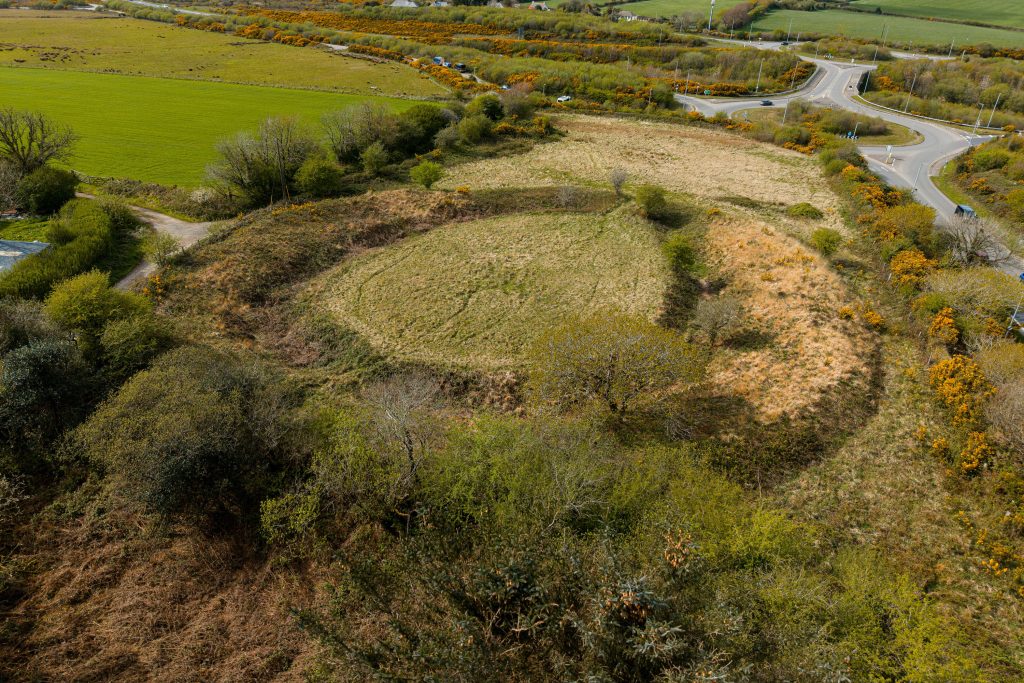
Located just off the A30 near Bodmin, Castilly Henge is believed to have been built during the late Neolithic period (about 3000 to 2500 BCE).
It is a substantial oval earthwork with an external bank and internal ditch, which would have formed an amphitheatre-like setting for gatherings and ritual activities. Its significance continued into the Early Bronze Age (c.2400-1500 BCE) when several high-status burial mounds or barrows were built close by.
Excitingly, recent surveys undertaken by Historic England’s Archaeological Investigation Team discovered traces of a now-removed possible stone circle in the middle of the henge. Not all henges contain stone circles, and there is only one other known to survive in Cornwall.
A four-week archaeological excavation is set to take place at the monument in September and October 2025 to target important questions about these findings to understand more about the monument’s character, date and potential later reuse.
Heritage at Risk…
The archaeology and biodiversity of Castilly Henge are currently at risk due to the threat posed by invasive vegetation. Modern development of the nearby road infrastructure and local service network, which lie within metres of the site, also poses potential risks.
It is currently inaccessible to the public and, despite much media attention over the last few years, many don’t know where it is located and how important it is.
Our charity has been protecting historic landscapes and monuments across Cornwall for the last 40 years. We have a strong track record of giving these special places the archaeological and land management expertise they need and have helped save a number from the Heritage at Risk Register. Help us do the same for Castilly Henge!

Join the fight for your heritage…
Your donation will help us to rescue Castilly Henge, secure its future through active management and enable the public to visit it for free all year round.
As a small, independent charity, every donation makes a huge difference to this urgent appeal.
Thank you so much for your support!
We’re so pleased to hear how much the students from Humphry Davy School benefited from their four-day ‘archaeology safari’ around Cornwall!
“I honestly loved every day, but the first day stood out to me as… I got to see sites I had never seen before.” Student
“I found being outside helped my emotions.” Student
“My favourite day was all of them, they were all good in their own ways.” Student
“Going out in nature felt calming and fun.” Student
“There were many good views.” Student
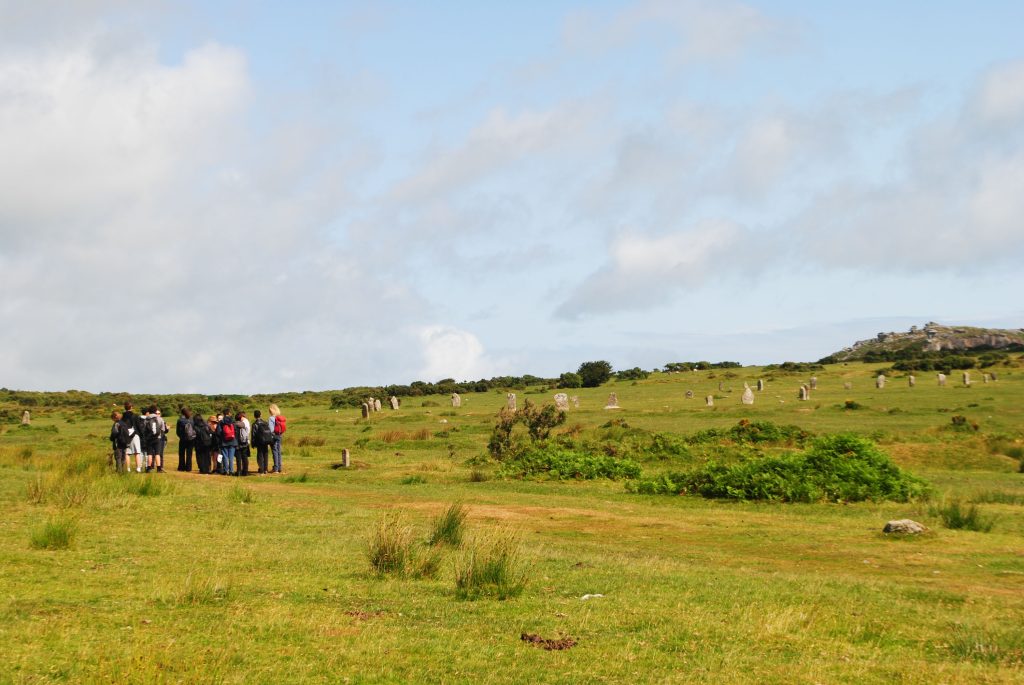
Led by our Education and Outreach Manager, Caroline, students from Year 8 – 10 were treated to a jam-packed programme of heritage exploration.
They spent four days travelling throughout Cornwall to visit and learn more about a huge number of the historic sites in our charity’s care. These included the Hurler Stone Circles, Trethevy Quoit, Caer Bran, Carn Euny, Tregiffian Burial Chamber, Sancreed Beacon and Castle an Dinas.
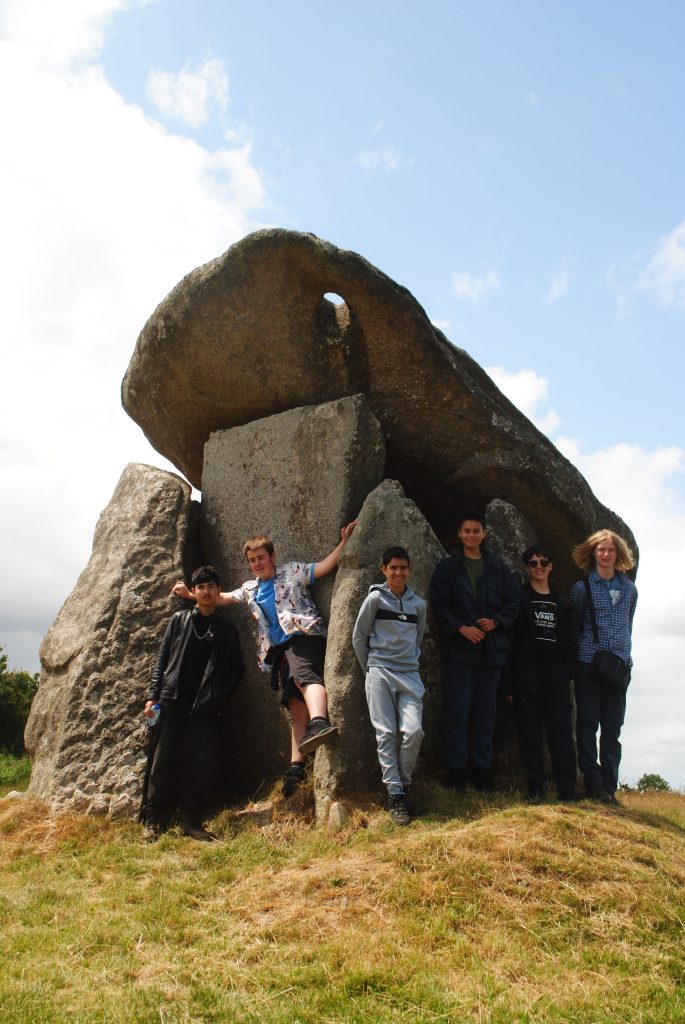
There was also time to stop off at some historic places that are looked after by other organisations and private owners, including the Cheesewring, Rillaton Barrow, Boscawen-un Stone Circle, The Merry Maidens Stone Circle and Chysauster Ancient Village.
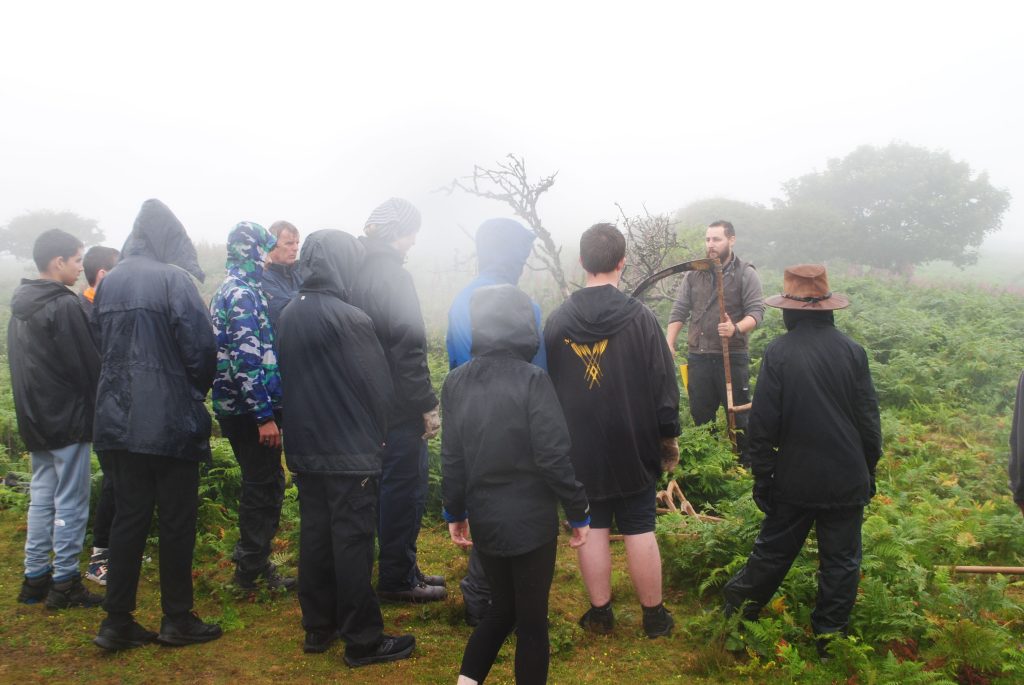
Activities ranged from handling historic objects and photographing archaeological features to learning how to scythe with our Rangers – all carefully designed to help bring the past to life for the students and boost their wellbeing along the way.
The site visits and transport for the safari were provided free of charge, with a small, subsidised charge for workshop materials.
“It definitely felt good to go on long walks when usually I don’t often.” Student
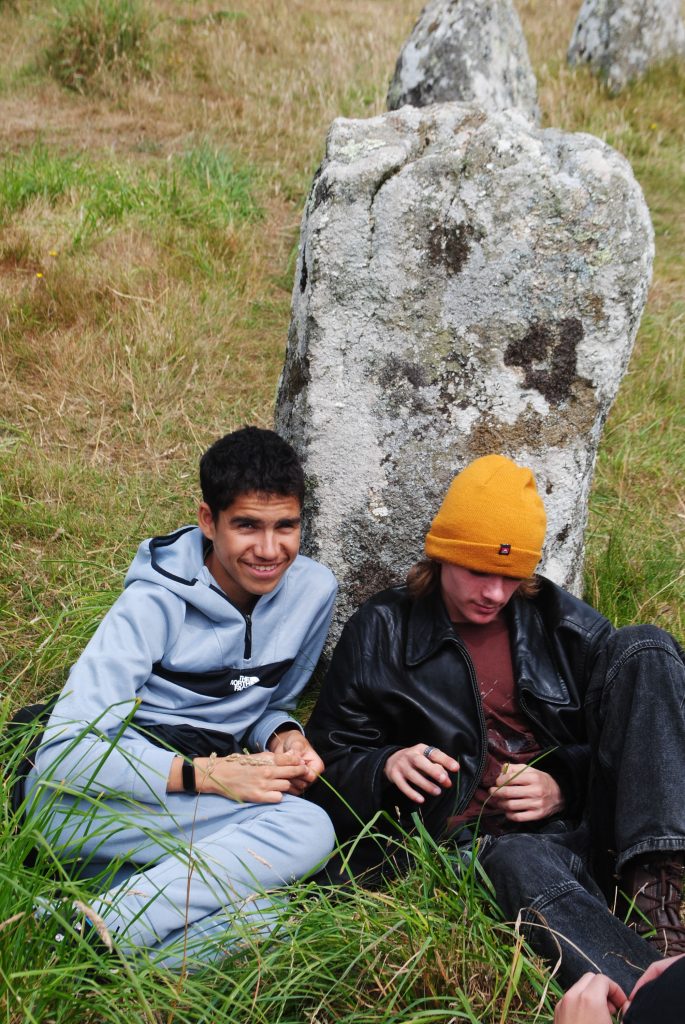
“I enjoyed seeing and learning about the sites – history and folklore.” Student
“Going outside 100% affects wellbeing in a good way.” Student
“The landmarks themselves were all interesting to see and learn about.” Student
We offer a wide range of free and subsidised workshops at our historic sites as part of our Discovery Programme, and feedback like this shows what inspiring learning experiences they are.
Our on-site workshops are provided to schools, alternative education provision and community groups free of charge. This programme is part-funded by the National Lottery Heritage Fund and the National Lottery Community Fund.
For those struggling with the cost of petrol and vehicle hire, you can also apply for one of our transport grants to support your visit. This academic year’s transport grants are part-funded by Cornish Lithium.