Calling all photographers… Cameras at the ready. It’s time for our annual Calendar Competition!
This year, we are looking for images inspired by the “Historic Landmarks in Cornwall”, so it’s the perfect excuse to get out and about and explore our unique and distinct heritage over the Summer.
We hope Tim Pearson’s stunning photo of ‘St Michael’s Mount under the stars’ from last year’s calendar will offer some inspiration.
12 winners will feature in our 2023 Calendar and receive a copy, whilst the Top 3 photographers will also win:
1st Prize – £50
2nd Prize – £30
3rd Prize – CHT Family Membership (worth £30)
The closing date for entries is 3rd August 2022 and we can’t wait to see your submissions. Please note that photos must be submitted via info@cornwallheritagetrust.org in order to be eligible to win.
Click here for all the details on how to enter
What an incredible evening we had celebrating the launch of our £49,832 community history project with our Platinum Jubilee lightings at Sancreed and Castle an Dinas!
Nearly 1300 people joined us last Thursday to light up the Beacons and celebrate the beginning of this landmark two-year project, which will see Cornwall Heritage Trust creating and growing community engagement and volunteering opportunities across its heritage sites, with a particular focus on Sancreed and Castle an Dinas. The project has been made possible by funding from the National Lottery Community Fund, as part of the Platinum Jubilee funding.
The evenings, which were free to all guests, involved music, pasties – courtesy of St Buryan Farm Shop and Peter Morris Butchers – and a great deal of merriment. At Sancreed, the Village Hall Committee also treated guests to a wealth of Jubilee-inspired cakes and live music in the evening sun.
The Beacon at Castle an Dinas was lit by Derek Lindsay, who was nominated for his dedication to preserving and strengthening heritage in Cornwall and specifically for his instrumental role in developing Padstow Museum. He was supported by Carl Roberts, who is Cornwall Heritage Trust’s honorary Vice President as well as a Founder Member and Founder Trustee.
William John Thomas was nominated to light the Beacon at Sancreed due to his heavy involvement in Sancreed Parish Council and the local Church as well as his hard work and dedication to the Parish.
Ahead of the lighting at Sancreed, pupils from Sennen School processed up the Beacon with lanterns created in a special workshop made possible by Cornwall Heritage Trust.
Cornwall Heritage Trust, CEO Cathy Woolcock said: “What an evening! We have a proud tradition of beacon lighting here in Cornwall and last night is one that I hope our communities will remember for many years to come.”
“Both events were incredibly special and would not have been possible without the support and help of a host of people. I would therefore like to thank Sancreed Parish Council, Sancreed Village Hall Committee, St Columb Old Cornwall Society, Trystan and Ben, our bugle players, William James, Peter James and the Rescorla band. Huge thanks go to all their hard work and dedication!”
Sancreed Beacon and Castle an Dinas are two of 12 historic Cornish sites owned or managed by Cornwall Heritage Trust. These sites are freely open to the to the public and more information about them can be found at www.cornwallheritagetrust.org
We are thrilled to share the news that the new Management Plan 2022-2027 from Cornwall Area of Outstanding Natural Beauty (AONB) has been officially adopted by Cornwall Council this May.
The five-year plan is a shared strategy for those who live, work and visit the Cornwall Area of
Outstanding Natural Beauty.
It provides guidance to help Government, statutory organisations and any public body to ensure they are fulfilling their Section 85 (Countryside & Rights of Way Act) duty to ‘have
regard to the purpose of conserving and enhancing the natural beauty’ of AONB.
The four key priorities of People, Place, Nature and Climate are at the forefront of the
Protected Landscape’s Policies, Aims and Objectives and Cornwall Heritage Trust is one of 20 partners which support the Cornwall AONB to deliver these.
The Management Plan is fully interactive to make it as accessible as possible for everyone to
engage with.
Cornwall is a beautiful part of the world, with a world-renowned coastline, a UNESCO World
Heritage Site designation, and a host of natural and heritage features that make it unique and such a draw for visitors and residents alike.
Areas of Outstanding Natural Beauty (AONBs) are protected landscapes whose distinctive character and natural beauty are so outstanding that it is in the nation’s interest to safeguard them. As such they have been nationally designated by the same legislation as National Parks and have the same status and level of protection.
Cornwall AONB is unique, it is the only AONB that has 12 separate sections totalling almost a third of Cornwall – an area bigger than Dartmoor National Park.
“What happens in AONBs matters. Cornwall has very strong strategic frameworks in place that shape its response to both the climate and ecological emergencies. These frameworks, reflecting national policy directives such as the legal commitment to net zero by 2050 and committing to 30% of our land in positive management by 2030, can only work if partners from across Cornwall work together to common aims,” said Emma Browning, Partnership
Manager Cornwall AONB.
“Within this Management Plan, we have committed to the key priorities of people, place, nature and climate as the driving ethos of its focus for the next 5 years.
“We have ambitious targets that we will achieve, with support and collaboration with our Partners, and our Plan has been shaped through extensive public consultation to be inclusive of all who live, work and visit -the stakeholders – of the Protected Landscape.”
The Cornwall AONB has 12 separate sections that reflect, recognise and define the diversity of our designated landscapes. Each of the 12 sections has its own representation in the Management Plan to create a sense of place. This includes its own local policies and objectives which are locally significant and align with the strategy as a whole. The detailed Local Sections reflect a diverse range of information which is useful for organisations, community groups and individuals including landscape character areas, biodiversity, culture & heritage, local partnerships and neighbourhood plans, other designations, landscape condition, health & wellbeing statistics: population, inequalities, risk groups.
“The 12 local sections within the Management Plan are aimed to be inspirational, informative and supportive, connecting people with place.
“As examples, these sections can support a neighbourhood plan’s development process,
support a funding application by a community group, stakeholder or partner, support an
educational programme and inspire residents and visitors to explore the protected
landscape in a sensitive way,” said Emma Browning, Partnership Manager, Cornwall AONB.
This plan is designed to help with accessibility to information. It is digital and interactive in its full form with downloadable chapters of the plan for ease of use. The AONB team are also preparing audio versions of sections of the plan and an abridged version, all of which will be made available on the website.
This is an important time for the Protected Landscape, and we want as many people to engage with the Management Plan, and use it, as possible.
To read the Management Plan visit: https://www.cornwall-aonb.gov.uk/
You can find the Cornwall AONB Team at Royal Cornwall Show Stand 248 from 9 -11 June 2022 and take away a copy of the abridged version of the Management Plan.
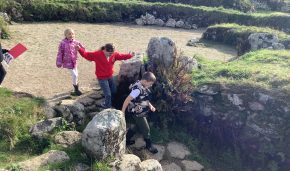
A big thank you to the Cornwall Heritage Trust and English Heritage volunteers, who came together from across Cornwall and Devon earlier this month to enhance the setting of the historic West Cornwall settlement of Carn Euny.
One of the best-preserved ancient villages in the South West, Carn Euny is located near Sancreed, Penzance. The Iron Age and Romano-British courtyard house settlement was occupied from about 500 BC to AD 400.
The two days of work saw volunteers join English Heritage and Cornwall Heritage Trust staff to undertake preservation work at the site, which included the removal of turf build-up from two houses and the laying of fresh gravel.
Gravel was first laid at the site in the 1960s in order to make it easier for visitors to appreciate the relationship between the interior and exterior parts of the complex. However, over time, turf has built up over this surface requiring maintenance.
The work is part of the second phase of an ongoing project at Carn Euny and a continuation of turf removal and gravel laying undertaken by volunteers in 2019. Future sessions are to be arranged to carry out the same works in three further houses in the ancient village.
Cathy Woolcock, CEO of Cornwall Heritage Trust, said: “I would like to thank all the volunteers who helped with this important enhancement of the Carn Euny site and we are especially grateful for the goodwill and assistance of the neighbouring farmer, Melville Wherry. CHT is presently planning to involve volunteers in a range of projects in the coming years and anyone interested in taking part can sign up on the Cornwall Heritage Trust website.”
Win Scutt, English Heritage Curator, said: “Carn Euny is a wonderful site and the work we have carried out makes it much easier for visitors to understand. The new gravel surfaces make the courtyards and houses so much clearer and also protect the sensitive buried archaeology from erosion. Working with our volunteers makes the whole job rewarding and so much fun too.”
Carn Euny is managed through a partnership between English Heritage and Cornwall Heritage Trust. Admission to the site, which includes a stone-walled underground passage (known as a fogou), is free and there is a free car park at Brane for visitors to use.
For additional information about Carn Euny, visit:
www.cornwallheritagetrust.org/our_sites/carn-euny/
www.english-heritage.org.uk/visit/places/carn-euny-ancient-village/
Photo credit: Gavin Parsons / English Heritage
It’s just over two weeks until we light up the Beacons at Sancreed and Castle an Dinas to officially launch our £49,832 community history project and celebrate The Queen’s Platinum Jubilee – and we can’t wait!
Everyone is invited to the lightings which are taking place from 7pm at Sancreed Beacon, Penzance and 8.30pm at Castle an Dinas, St Columb Major on Thursday 2 June 2022.
The events are entirely free and open to all members of the public. Free pasties and refreshments will be served.
To book your free pasty and for full details of timings, head here
www.cornwallheritagetrust.org/community/platinum-jubilee-beacon-lighting-celebrations/
The lightings mark the official launch of a landmark two-year project, which will see us creating and growing community engagement and volunteering opportunities across our sites, with a particular focus on Sancreed and Castle an Dinas.
We are so excited to launch this project, which will involve creating dedicated community groups at these two sites, as well as school visits, workshops, volunteering opportunities, guided walks and outreach events to gather more information about the history of these localities and to enable people to find out more about the heritage in their local landscape.
Huge thanks go to the National Lottery Community Fund for making this project possible, as part of its Platinum Jubilee funding. In honour of this, the Beacon lightings will also mark the 70 years of Her Majesty the Queen’s reign, as part of the Jubilee’s official programme of celebrations.
The Beacons will be lit by people nominated by local communities for the amazing things they have done to preserve and strengthen heritage in Cornwall.
A huge thank you to everyone who is making this wonderful night possible.
Looking forward to celebrating with you all there!
We are delighted to announce that we have been awarded £49,832 from the National Lottery Community Fund as part of the Platinum Jubilee funding launched to celebrate 70 years of Her Majesty the Queen’s reign.
The Platinum Jubilee funding was designed to create a greater legacy for our places and spaces, aimed at projects that support new opportunities, inspire activities and build better relationships with one another across the generations and with the natural world.
Our two-year project will focus on creating and growing community engagement and volunteering opportunities across our heritage sites, with a particular focus on Sancreed and Castle an Dinas, where we plan to create dedicated community groups.
We will be running school visits and workshops, as well as Story Cafés and outreach events to gather more information about the history of the localities around these fascinating spaces.
There will also be the chance to get hands-on, as part of the funding will enable us to carry out a site clearance project at Sancreed Beacon with our new volunteers. If you are interested in signing up to become a volunteer, click here. We will also be leading guided walks on the sites to enable people to find out more about the heritage in their local landscape.
The project officially launches on 2nd June when we will join the national beacon lighting event to mark the Platinum Jubilee. Beacons will be lit at Castle an Dinas and Sancreed Beacon at 9.45pm and we hope to be joined by the local communities as well as members and friends.
The legacy of this funding will see our historically important sites being cared for by local people who work with the Trust, improving the spaces for everyone to enjoy. By working with schools and young people we will ensure that future generations are also inspired to care for their local heritage and continue to look after the sites.
We plan to use this project as a model for our other sites and establish volunteering as a key element of our work moving forwards. It is hoped that as volunteer numbers grow, we will be able to expand the scheme to also include neighbouring sites and places of interest. The skills and knowledge gained during this project will then be shared so that more people benefit as the scheme continues to grow.
Thank you to National Lottery players for making this possible!

Cornwall Heritage Trust is proud to have purchased Caer Bran – an important multi-age hillfort site near Sancreed, which contains archaeological remains from both the Bronze Age and Iron Age periods. The purchase allows the Trust to protect the nine-hectare site from possible development and intensive agricultural use, recognising its importance as a site of unique Cornish heritage.
CEO Cathy Woolcock said “We are excited to have been able to add Caer Bran to the collection of sites across Cornwall that we manage and protect and which are all accessible by the public for free. Cornwall Heritage Trust seeks to preserve and strengthen Cornwall’s heritage and educate current and future generations about the heritage significance of the landscapes we live in; Caer Bran will help us to do this.”
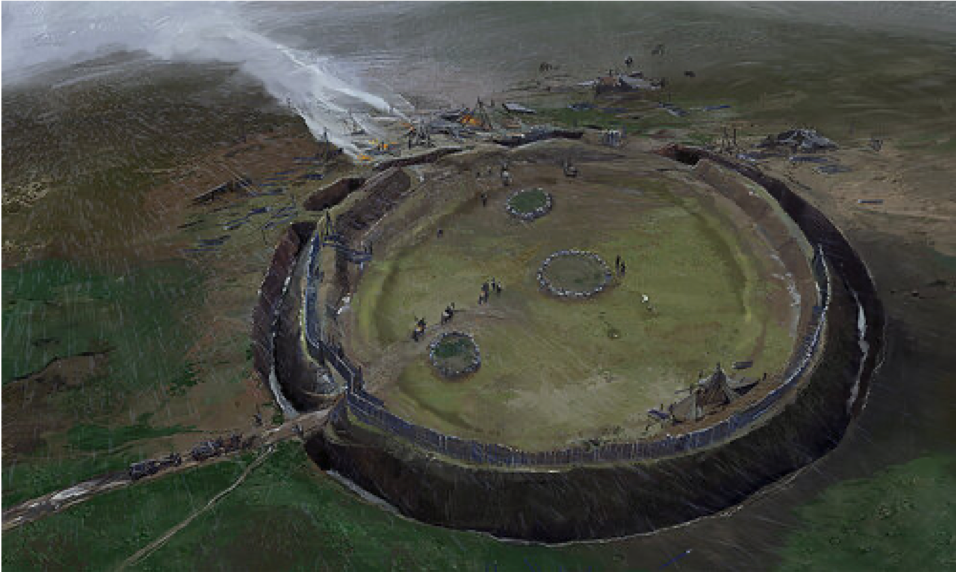
Traditionally considered to be an Iron Age enclosure, recent research shows that Caer Bran actually had origins in the Bronze Age, with the construction of three ring cairns set within a hilltop enclosure. These can still be viewed at the site. Re-enclosure of the monument took place in the Iron Age with a more substantial bank and ditch, and this continuity shows the importance of Caer Bran to the people of the local area.
‘Caer is Cornish for fort’ and Bran means ‘raven’ but, Caer Bran could also mean the “fort of Bran,” which is a reference to Bran the Blessed, a mythological Celtic king.
CHT Chairman Lt Col Richard Trant said:
“The Trust has been tracking the Caer Bran property for many years and we were hugely excited when it came back on the market over the Christmas period. It is therefore tremendously pleasing that we have now secured this very special site for the future.
Caer Bran is a property which, as an example of Iron Age presence in Cornwall, has great archaeological importance. Equally, it gives sanctuary to some wonderful flora and fauna, our natural heritage, that the Trust will also protect and nurture.
Caer Bran is a jewel of a site which complements our adjacent sites in West Penwith. Its purchase aligns perfectly with our recently reviewed strategic purpose to protect and preserve Cornish heritage sites for ‘One and All’. I would like to thank the CHT team for their hard work to secure Caer Bran and also a big thank you to Historic England for their potential support of this Cornish gem.”
Cornwall Heritage Trust already own neighbouring Sancreed Beacon, and manage the nearby ancient village of Carn Euny. These sites are freely open to the public and more information about them can be found at www.cornwallheritagetrust.org


Cornwall Heritage Trust presents a Cornish Story Cafe – HMS Warspite with Richard Holme.
This fascinating story of the battleship HMS Warspite, renowned for her numerous battle honours, ending her days wrecked off Prussia Cove, will be told by Marine historian Richard Holme.
The free event starts at 3pm on Thursday 24th February at the Marazion Community Centre.
For more information and details on how to book a free place, please visit our Story Cafes web page.


Notice is hereby given that the 36th AGM of the Cornwall Heritage Trust will take place by Zoom on Wednesday 1st December at 3pm
Last year we were unable to hold a public AGM due to the lockdown restrictions and the decision was reluctantly made that it was necessary to hold a closed meeting online. This year we are once again holding our AGM online, however we are pleased to be able to open the meeting to all members and friends once again. The meeting will take place via Zoom on Wednesday 1st December 2021 at 3pm; if you would like to join us you will need to register via EventBrite to receive a Zoom link to use to access the meeting.
Agenda and Draft Minutes from AGM 2020
A copy of the agenda for the AGM is available to download, along with the minutes of last year’s AGM; the draft 2020-21 Annual Accounts will be posted as soon as they are available. If you would like a paper copy of any of the documents please contact the office, an A4 stamped addressed envelope would be much-appreciated.
CHT Draft AGM Minutes 19.11.20
If you have any queries relating to the agenda or wish to propose a matter for discussion please do get in touch by email at info@cornwallheritagetrust.org.

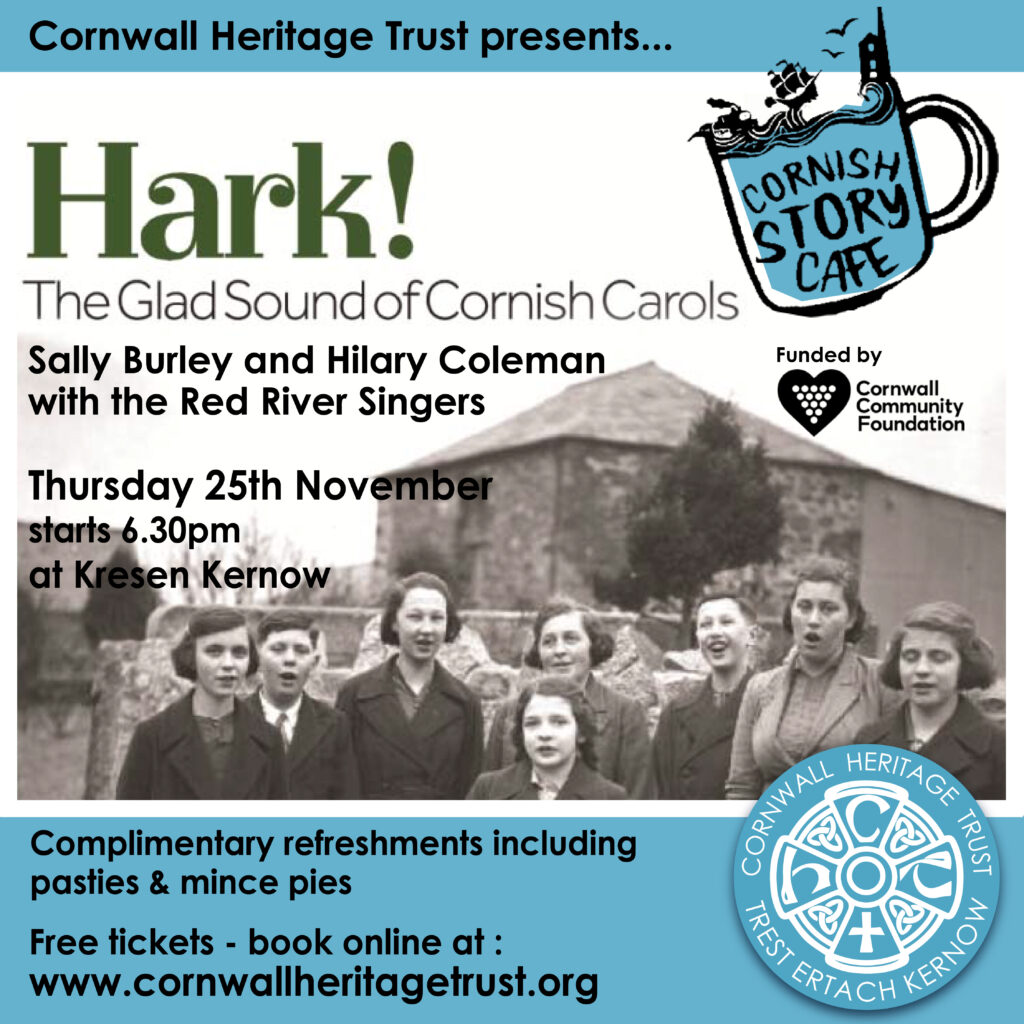
Following the success of their 2015 book Shout Kernow, which won the Waterstones’ Holyer an Gof Award, Sally Burley and Hilary Coleman turned their attention to exploring the continuity and revival of the Cornish carolling tradition. During 2016 they travelled around Cornwall, recording stories, memories and local versions of carols.
Cornish carols are special and have a long history which deserves recognition. These carols are part of Cornwall’s rich communal singing. “We hoped the book would raise awareness of them and preserve this heritage as well as increasing knowledge of Cornish history through the background of the carols and the local stories” said Sally Burley.
Funded by the Cornish Heritage Trust, The Federation of Old Cornwall Societies and the Red River Singers, the book is accompanied by 2 CDs of recordings and contains 32 carols with associated history and photos.
‘Hark! The Glad Sound of Cornish Carols’ was published in November 2017 and immediately sold extremely well virtually selling out within a month! Hilary and Sally were delighted when they also received an Holyer An Gof award in 2018 as well as the publishers cup!
They will be telling tales of their adventures as well as ‘illustrating’ their talk with songs, helped out by the Red River Singers. They will also provide songbooks so people can join in if they wish.
Free Tickets available to book via Eventbrite
We are very grateful to Cornwall Community Foundation who helped to fund our story cafes.

Last week our Story Cafe Trethevy Quoit with Andy Jones took place via Zoom and live streamed to our Facebook page. If you missed it, or would like to watch it again, we have now uploaded a recording onto the CHT Youtube Channel.
Andy is the Principal Archaeologist with the Cornwall Archaeological Unit, and gave an excellent presentation on the findings of a recent archaeological dig at Trethevy Quoit as well as a fascinating insight into portal dolmens putting the Cornish quoits into context.